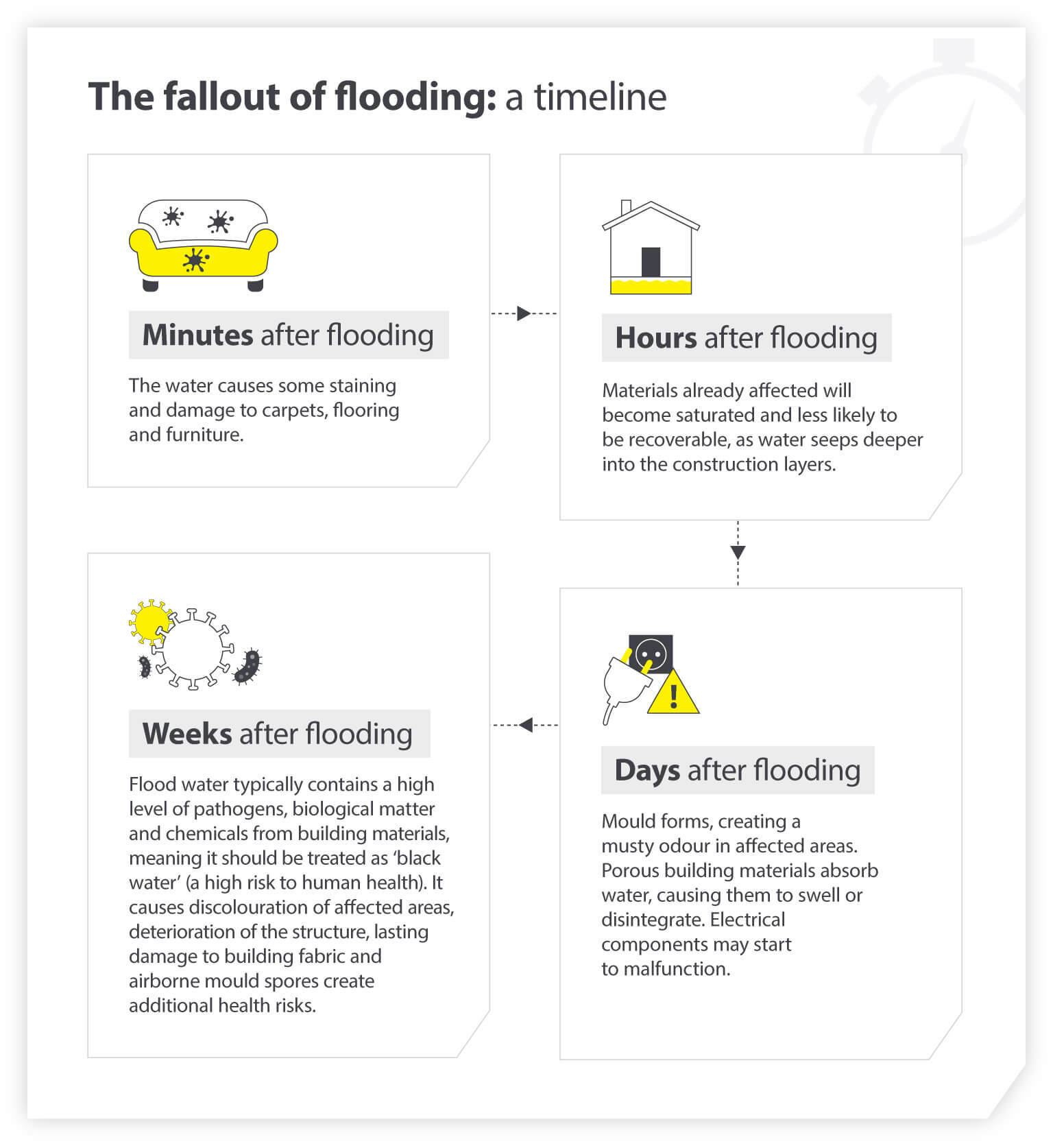
When a house is flooded, one of the first questions homeowners ask is how long it will take to dry the property properly. Indoor flood damage is very different from outdoor flooding or river levels going down.
Professional flood damage restoration focuses on:
• Removing standing water inside the property
• Extracting moisture from walls, floors and insulation
• Preventing mould growth
• Restoring safe indoor conditions
Drying a flooded house in the UK typically takes between 3–7 days for minor clean water incidents and up to 2–3 weeks for severe or contaminated flooding, depending on building materials and structural saturation.
This guide explains how long flood damage cleaning usually takes, what delays recovery, and how to speed the process up safely.
Typical Flood Damage Cleaning Timescales in the UK
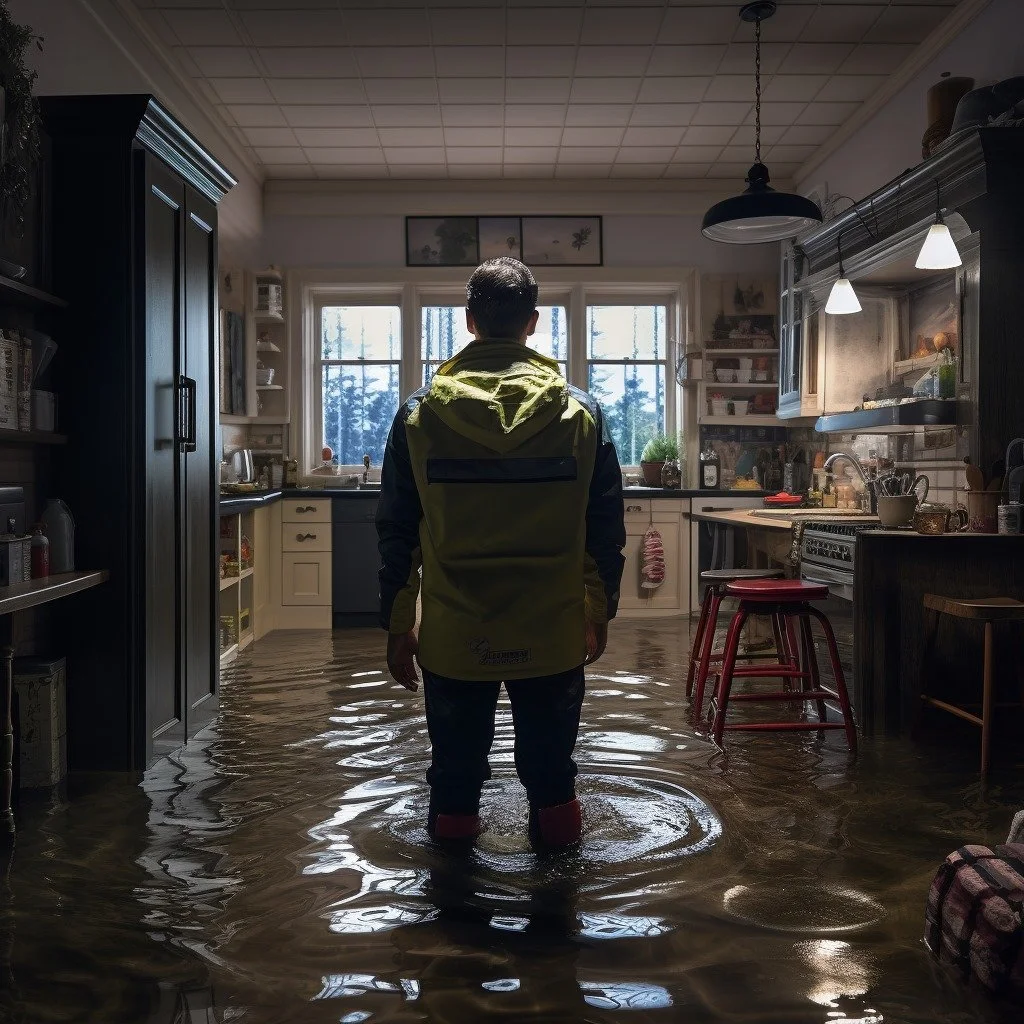
Most flood damage cleaning jobs fall into these broad stages:
- Initial assessment: same day or within 24 hours
- Emergency water removal: 1–3 days
- Contaminated material removal: 1–5 days
- Deep cleaning and sanitisation: 2–7 days
For a full explanation of what flood damage cleaning involves, when it is required, and how recovery works, see our guide to Flood Damage Cleaning in the UK.
For minor flooding, cleaning may be completed within a few days. Severe flooding involving sewage or long-standing water can take significantly longer.
What Factors Affect Flood Damage Cleaning Time?

Several factors influence how long flood damage cleaning takes:
- Amount of water involved
- How long the water was present
- Whether water is clean, grey, or sewage-contaminated
- Type of flooring and wall construction
- Access to the property
Properties with suspended floors, plasterboard walls, or insulation usually require longer cleaning and preparation.
Clean Water vs Contaminated Floodwater
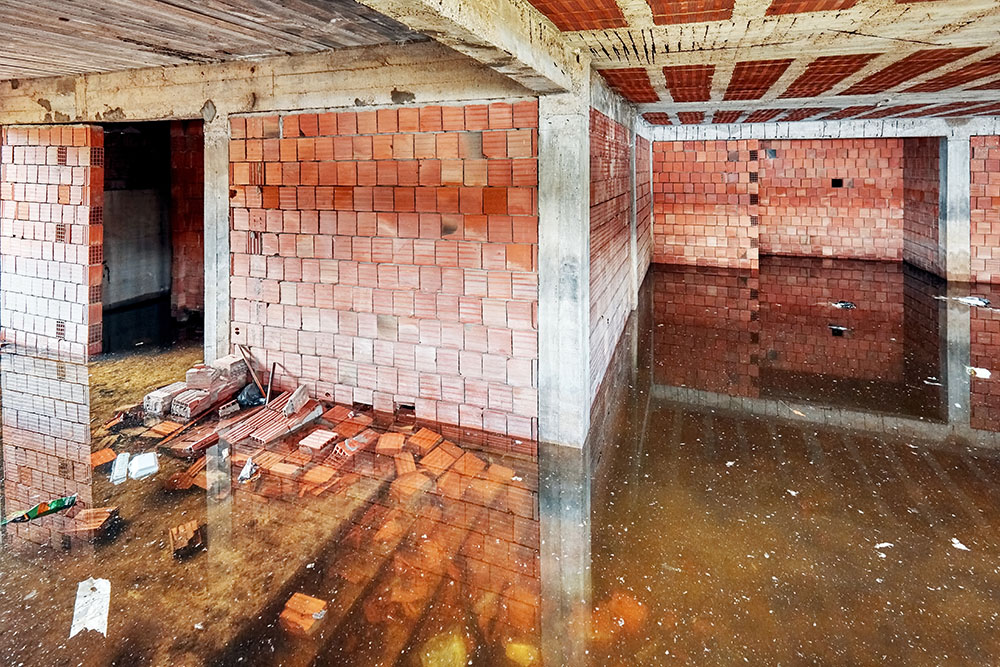
Floodwater is generally classified as:
- Clean water: burst pipes or tanks
- Grey water: appliances or drainage
- Black water: sewage or river flooding
The more contaminated the water, the longer cleaning takes due to disinfection, waste handling, and safety controls.
How Quickly Action Is Taken Matters
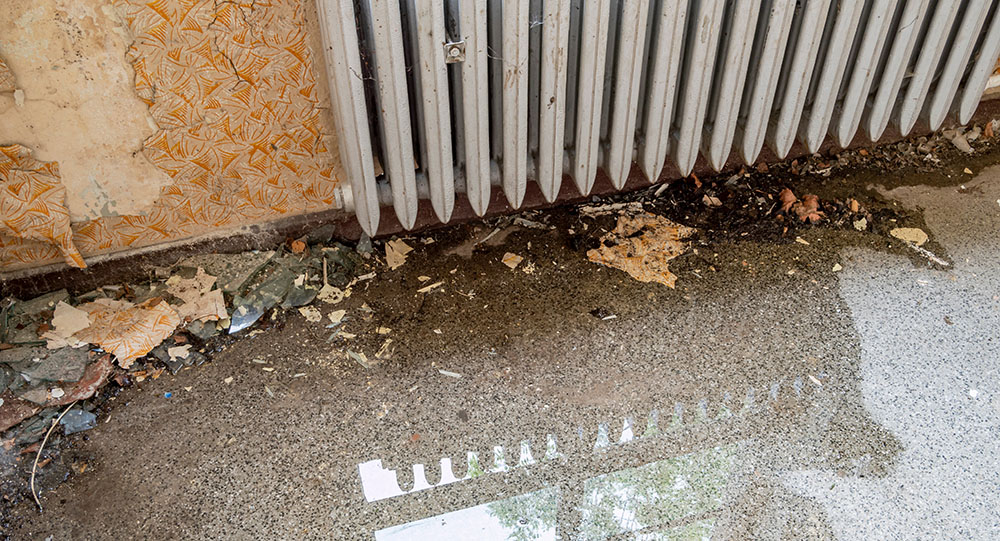
Delays significantly extend cleaning time. Water left for more than 24–48 hours can:
- Penetrate deeper into materials
- Increase bacterial growth
- Cause odours to embed into structures
- Increase mould risk
Early professional intervention often cuts total recovery time in half.
Flood Damage Cleaning vs Drying Time

Flood damage cleaning and drying are different phases.
Cleaning removes contamination and unsafe materials.
Drying removes trapped moisture and can take 2–6 weeks depending on construction.
➡️ Drying After Flood Damage – How Long It Takes and Why It Matters
Can Flood Damage Cleaning Be Rushed?

Rushing flood damage cleaning often causes problems later, including:
- Persistent smells
- Mould outbreaks
- Structural deterioration
- Insurance disputes
Proper cleaning must be completed before drying and repairs begin.
When Flood Damage Cleaning Takes Longer Than Expected
Extended timescales are common when:
- Multiple rooms are affected
- Structural materials must be removed
- Insurance inspections delay progress
- Drying reveals hidden damage
Longer timelines usually reflect thorough work, not inefficiency.
Flood cleaning timescales vary depending on contamination levels, drying requirements, and restoration needs, all of which are covered in more detail in our main guide on Flood Damage Cleaning in the UK: What It Is, When It’s Needed, and How Recovery Works.
How to Reduce Flood Damage Cleaning Time Safely
You can reduce cleaning time by:
- Acting immediately
- Using professional flood cleaning services
- Removing contents early
- Allowing access for inspections
Trying to DIY complex flood clean-ups often slows recovery overall.
Flood Damage Cleaning Timescales – Summary
Flood damage cleaning may take days or weeks depending on severity, contamination, and response speed. Early professional involvement is the most effective way to minimise disruption and long-term damage.

TrustedCare Editorial Team publishes UK guidance on specialist cleaning and biohazard remediation, including after-death cleaning, flood restoration, and contamination control. Content is written for homeowners, landlords, housing providers, and facilities teams seeking clear, practical information.