Sewage Backups • Booking Help • Insurance Records
Emergency Sewage Cleanup: A UK Booking Guide
What to do first, who to contact, what to ask a cleaning contractor and which records to keep after a sewage backup.
UK Bio Hazard Blog provides general information. The contact buttons connect you to TrustedCare for service enquiries.
What to Do First During a Sewage Backup
Keep people away from the affected area, arrange help to stop the source and contact your insurer promptly. Sewage cleanup and clearing a blocked drain are different jobs; you may need both a drainage contractor and a specialist cleaning team.
A sewage backup occurs when wastewater flows back into a property through toilets, drains or other connected outlets. Treat suspected sewage as contaminated, even when the water looks relatively clear.
Electrical safety comes first. Do not walk through wastewater to reach the consumer unit. Only isolate the supply if you can reach and operate it safely from a dry position. If electrical equipment or the consumer unit may be wet, stay clear and obtain professional help. Call 999 if there is immediate danger to life.
- Keep children, pets and anyone especially vulnerable away from contamination.
- Stop using affected toilets, sinks and water-using appliances if they are feeding the backup.
- Do not lift manhole covers or enter drains, pits or confined spaces.
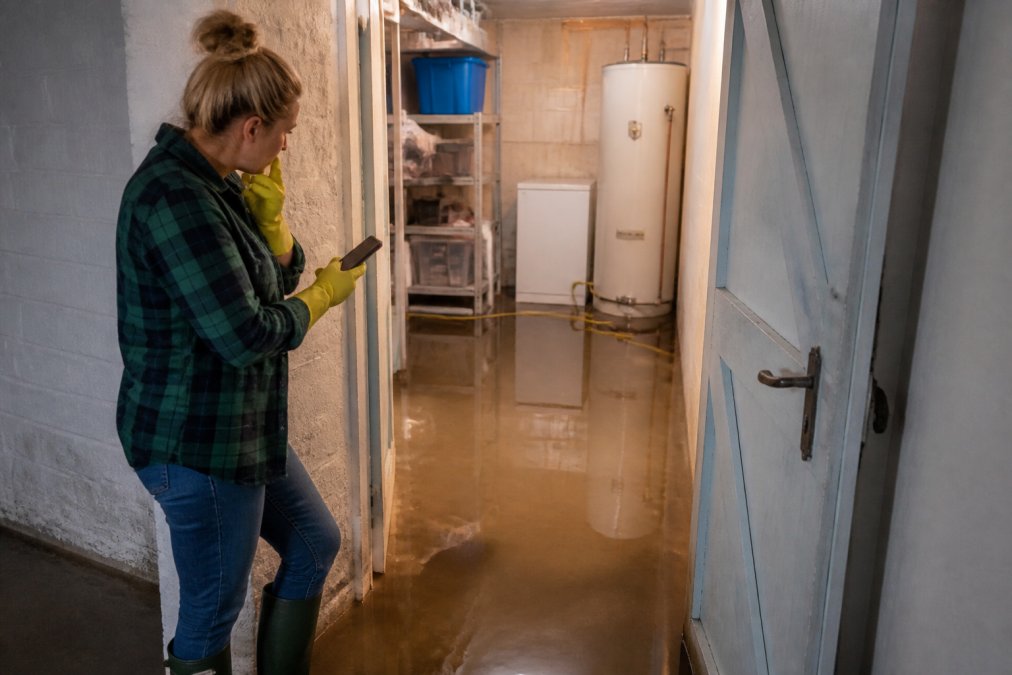
- Take photographs from a safe position; do not enter sewage to collect evidence.
- Do not use a household vacuum or pressure washer on sewage.
- Avoid directing fans across contaminated materials or using affected ventilation equipment before assessment.
See GOV.UK guidance on returning to a flooded property, including links to advice for Scotland, Wales and Northern Ireland.
Who Should You Contact?
A drainage contractor or sewerage company: report the blockage or ongoing sewage flow. Explain whether neighbouring properties are affected. Who deals with the problem depends on the location and responsibility for the affected drain or sewer; do not assume a cleaning quote includes clearing it.
Your insurer: report the incident and ask whether they will appoint a contractor, what emergency work can be authorised and what evidence they require.
Your landlord or managing agent: notify them promptly if the property is rented or the incident affects shared areas. Agree who is arranging access and instructing work.
A specialist cleaning provider: request an assessment of contamination, affected materials and any drying requirements once access can be made safe.
How to Book Emergency Sewage Cleanup
- Prepare a short incident summary. Give the address and postcode, property type, affected rooms, approximate floor area, when the problem started and whether wastewater is still entering.
- Describe access and hazards. Mention stairs, basement rooms, parking restrictions, electrical concerns and whether people can avoid the affected area.
- Share photographs if safe. Pictures can help with initial planning, but they cannot reveal all contamination or moisture beneath surfaces.
- Explain the insurance position. Provide a claim reference if available. Ask whether you pay the contractor directly or whether an insurer has agreed another arrangement.
- Ask for a written scope. Separate extraction, material removal, cleaning, disinfection, waste disposal, drying, monitoring and reinstatement.
- Confirm price and attendance. Ask about assessment fees, minimum charges, VAT, out-of-hours charges, equipment hire, deposits and cancellation terms.
- Agree how extra work is approved. Hidden damage may change the scope. Ask the contractor to explain and obtain agreement before additional chargeable work.
Useful wording for your first call: “We have a sewage backup at [postcode]. It started at [time], affects [rooms], and is [still flowing / stopped]. We have [reported / not yet reported] it to our insurer. Can you explain your attendance window, assessment charge and whether your quote includes drying and waste removal?”
Checking a Contractor Before Booking
Ask for the business name, relevant insurance and experience with sewage contamination. Request an explanation of their working method, waste arrangements and completion records. Verify any accreditation they claim with its issuing organisation. A badge or a promise of “full sanitisation” does not explain what your particular job includes.
Need Help Arranging Sewage Cleanup?
Contact TrustedCare with the postcode, affected rooms and whether the sewage flow has stopped. Ask for the current attendance window and scope of work.
What Professional Sewage Cleanup Involves
The method should reflect the source, extent of contamination and construction of the property. Not every incident requires the same equipment or amount of material removal.
- Assessment and source control: identify hazards and confirm arrangements for stopping the backup.
- Protection of unaffected areas: plan access and control the transfer of contamination.
- Extraction: remove accessible wastewater and solids using suitable equipment.
- Material assessment: determine what can be restored and what needs removal, including hidden affected layers where relevant.
- Cleaning and disinfection: remove soiling and apply suitable products in accordance with their instructions.
- Drying where needed: select equipment and monitoring methods for affected materials after appropriate contamination control.
- Completion assessment: document the work, remaining limitations and any further repairs or specialist checks required.
Removing standing water does not complete the job if contamination or moisture remains under flooring or within walls. Conversely, it is inaccurate to say every sewage incident requires removal of all affected materials: the contractor should explain each decision.
Read more about sewage flooding and specialist cleaning.
How Quickly Can a Team Attend?
Ask the provider for a current attendance estimate. Distance, workload, access, equipment and the need for drainage repairs can all affect timing. A 24/7 enquiry service does not by itself guarantee immediate attendance.
Keep three timescales separate: arrival for assessment, completion of contamination cleaning, and completion of any structural drying and repairs. Drying may continue after cleaning has finished. The extent of wet materials and measured progress matter more than a fixed number of days.
For more detail, see flood-cleaning and drying timescales.
Insurance: What to Record and Agree
Cover depends on the policy, cause of the incident, exclusions and the work being claimed. A contractor cannot guarantee that your insurer will reimburse a bill.
Ask your insurer what can be authorised immediately, whether they need an inspection and how to document items that cannot safely remain. Do not delay emergency action needed to protect life while waiting for claim approval.
- Keep photographs, an incident timeline and the claim reference.
- Retain quotes, written instructions, invoices and payment receipts.
- Record damaged belongings and any urgent disposal, with photographs where safe.
- Keep the contractor’s assessment, removal records and drying readings where applicable.
- Ask how equipment electricity use and temporary accommodation are handled under your policy.
Speak to the insurer before non-urgent strip-out or disposal. If retaining an item creates an immediate hazard, seek prompt advice and document why urgent action was needed. Neither a missing photograph nor early removal automatically determines the outcome of every claim.
The Association of British Insurers’ flood guidance explains the wider recovery and claims process.
Health Precautions While Waiting
Contact with contaminated water can cause illness, including skin and gut infections. Avoid contact, cover cuts with waterproof dressings and wash hands with soap and water after accidental exposure. Seek medical advice if you become unwell and mention the exposure.
Waterproof gloves, boots and protective clothing can reduce contact during suitable cleanup work. They do not protect against every hazard, including electricity, unsafe structures or hazardous atmospheres. An ordinary face covering is not a substitute for task-appropriate respiratory protection.
Do not enter an unsafe area simply because you have protective equipment. Do not mix cleaning chemicals or use an improvised spraying or fogging treatment.
See UKHSA advice on flooding, health and safe cleanup.
Can You Clean Up Sewage Yourself?
A very limited incident on an intact, washable surface may need a different response from a room flooded with sewage. There is no universal safe DIY threshold based only on spill size. Consider the source, hidden spread, affected materials and whether safe access is possible.
Seek specialist assessment for standing sewage, visible waste, contamination across several rooms, affected porous materials, recurring odours or uncertainty about where the water has travelled. In rented or shared premises, coordinate with whoever is responsible for managing the property.
How Do You Know the Work Is Complete?
Ask what completion means for the work you commissioned. Cleaning records and drying records answer different questions. A moisture reading does not prove disinfection, and a clean-looking surface does not prove hidden construction is dry.
Where drying was needed, ask for the measurement method, comparison readings or agreed targets, and final results. Any sampling or air testing should have a clear purpose and interpretation; a generic air-quality test cannot establish every aspect of a property’s safety.
A completion report should describe the treated areas, materials removed, outstanding work and limitations. A Certificate of Sanitisation, where provided, records the stated cleaning work; it does not replace electrical, structural or drying assessments.
Frequently Asked Questions
Should I call a drain company or a sewage cleaner?
You may need both. A drainage provider deals with the blockage or source; a specialist cleaner deals with contamination and any agreed drying work. Confirm who is responsible for each stage.
What information should I give when booking?
Provide your postcode, contact number, property type, affected rooms, when the incident started and whether wastewater is still entering. Mention access restrictions, known hazards and insurer instructions.
Does an emergency callout include drying?
Not necessarily. Ask for a written breakdown covering extraction, cleaning, waste removal, drying equipment, monitoring visits and completion records.
Will my insurance pay for sewage cleanup?
That depends on your policy and the circumstances. Report the incident promptly and ask the insurer what they authorise, which contractor to use and what evidence to retain.
Does everything touched by sewage have to be thrown away?
No single rule covers every item. The material, level of contamination and ability to clean and dry it matter. Ask the contractor to explain proposed disposal and coordinate with your insurer.
Can I return as soon as the smell has gone?
Odour alone cannot establish safety. Return depends on the condition of the property, completed cleaning, any necessary drying and checks of affected services or structures.
Discuss Sewage Cleanup With TrustedCare
Explain what happened and ask about assessment, availability and the work your property may need.
