Home Safety • Hoarding Hazards • Practical Support
How to Identify Hoarding Hazards: A Practical Guide
A room-by-room guide to recognising blocked exits, fire risks, unsafe storage and sanitation problems, while respecting the person who lives in the home.
UK Bio Hazard Blog provides general information. These buttons connect you to TrustedCare for specialist cleaning enquiries.
What Counts as a Hoarding Hazard?
Hoarding hazards arise when accumulated items interfere with safe movement, escape, essential facilities or the condition of the building. Focus on what people can safely do in the home, rather than how tidy it looks.
Blocked doors, paper beside a heater and unstable stacks can create risks even when only one room is affected. You do not need to wait until several rooms become unusable before seeking advice.
Hoarding disorder is a mental health condition involving difficulty parting with possessions that affects everyday life. A cluttered home alone does not establish a diagnosis. Encourage someone who is struggling to speak to their GP; see the NHS explanation of hoarding disorder.
Immediate danger: if there is a fire, smoke, a collapse or another immediate threat to life, move to safety and call 999. Do not enter an unsafe property to complete this checklist or retrieve possessions.
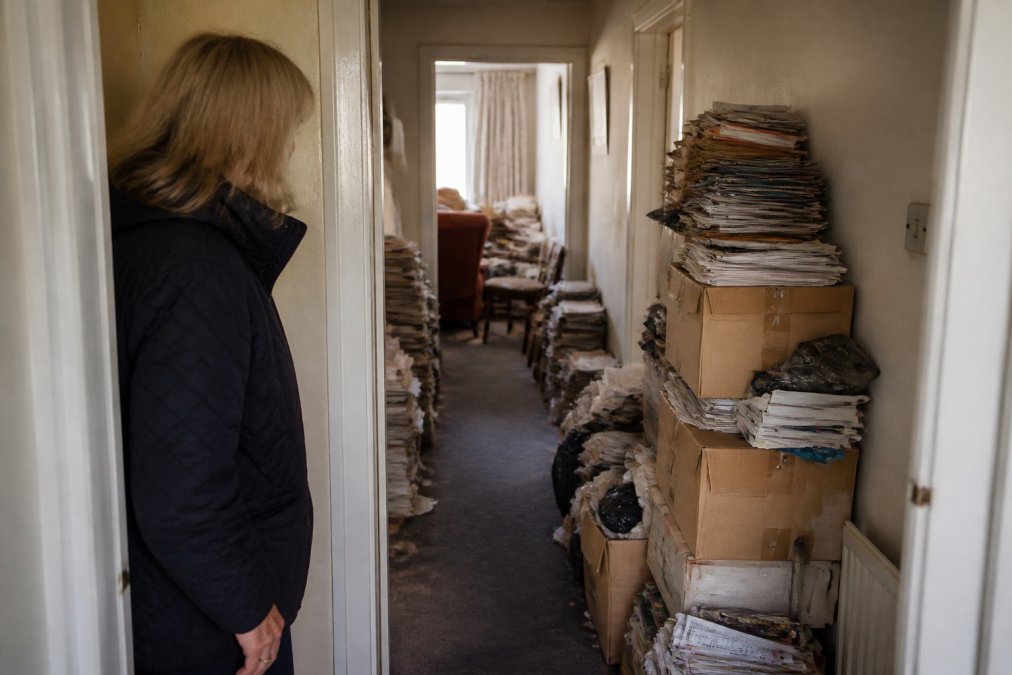
A Room-by-Room Hoarding Safety Checklist
This is an informal observation checklist, not a clinical diagnosis, formal fire risk assessment or certificate that a home is safe. Only observe areas you can access safely and with permission.
Entrance, Hall and Stairs
- Can the entrance door open sufficiently for the resident to leave without moving possessions?
- Can the resident reach and operate the lock, using their usual mobility aids?
- Are the routes between the bed, bathroom and exit free of trip hazards?
- Are stair treads clear and handrails accessible?
- Could a falling stack obstruct the route?
Do not test an escape route by switching off the lights. Consider the resident’s mobility, eyesight and ability to respond in an emergency.
Kitchen and Utility Areas
- Can the cooker and food-preparation surfaces be used safely?
- Are paper, packaging and fabrics stored close to heat sources?
- Are appliance ventilation openings obstructed?
- Are there damaged cables, scorch marks or extension leads connected to other extension leads?
- Are spoiled food, leaking containers or pest signs present?
- Can essential controls be reached without climbing over items?
Do not move stored items onto a cooker to create temporary space. Electrical and gas concerns need an appropriately qualified professional.
Bathroom and Sleeping Areas
- Are the toilet, basin and washing facilities accessible and usable?
- Is the bed available for sleeping, with a clear route to the door?
- Can medicines, glasses, a phone and mobility aids be reached?
- Are there leaks, persistent damp, visible mould or sewage?
- Could items fall onto the bed or obstruct someone getting up?
Living Rooms, Storage Areas and Outside
- Are stored items stable, without leaning stacks or heavy objects overhead?
- Are heaters and other heat sources clear of stored material?
- Are vents or air bricks visibly obstructed?
- Are there droppings, gnaw marks, animal waste or damaged containers?
- Are paths and any shared escape routes obstructed?
- Are floors visibly sagging or are there other signs of possible structural movement?
Record suspected structural problems from a safe position. Do not test a floor’s strength or start shifting a large load yourself.
How to Record What You Find
For each concern, note the location, what you actually observed, who may be affected and the next action. Record areas you could not see as “not assessed”, rather than assuming they are safe.
A useful note: “Boxes prevent the bedroom door opening fully; resident uses a walking frame; discuss safe access with the resident and support worker.” This gives someone enough information to plan help without labelling or blaming the resident.
Ask permission before taking photographs, explain their purpose and share them only with people who need them. Do not photograph private documents or personal belongings unnecessarily.
One serious concern can justify urgent advice. For example, a resident unable to leave safely needs prompt help even if the rest of the home is usable. An informal score should never overrule an obvious hazard.
Need Advice About Specialist Cleaning?
Tell TrustedCare the postcode, affected rooms and any known contamination. Explain whether safe access and the resident’s agreement are in place.
Fire Safety and Escape Routes
Accumulated combustible material can increase the severity of a fire, while obstructed routes can delay escape and make emergency access harder. Priorities include keeping routes usable, separating possessions from heat sources and having suitable working alarms.
Ask the local fire and rescue service about a home fire safety visit. Explain any mobility or hearing difficulties and the extent of the storage. The London Fire Brigade’s hoarding guidance explains these concerns and practical ways to reduce risk.
Do not wedge fire doors open or move stored items from a flat into shared corridors. For a block of flats, follow the building’s emergency plan and report obstructed common routes to the building manager.
Alarm requirements and legal duties depend on the UK nation, tenure and building. There is no single “hoarding fire law” that applies identically to every private home. Ask the relevant fire service or housing authority about the particular property.
Health, Sanitation and Structural Concerns
Clutter does not automatically mean that a property is contaminated. Assess actual signs: spoiled food, sewage, animal waste, pest activity, leaks, mould or damaged chemical containers.
Do not handle hidden needles, disturb suspect asbestos-containing materials or open unidentified chemicals. Avoid sweeping or vacuuming pest debris with ordinary household equipment. Describe these findings when seeking specialist advice so suitable precautions can be planned.
Cleaning cannot repair a defective floor, leaking pipe or unsafe electrical installation. Where there are structural concerns, obtain advice from an appropriately qualified building professional before clearance. A large quantity of possessions alone does not establish that a floor is overloaded.
Consent, Capacity and Rented Homes
Working With the Resident
Agree the purpose of any visit and what, if anything, may be moved. Start with a specific practical goal, such as making the route to the bathroom usable. Do not arrange a surprise clearance or assume unwanted-looking possessions are rubbish.
Reluctance to accept help is not, by itself, evidence that someone lacks mental capacity. In England and Wales, capacity is considered for the particular decision at the relevant time. A person can make a decision others regard as unwise and still have capacity.
A power of attorney or deputyship is not blanket permission to force entry or dispose of belongings. Its scope and the circumstances matter. See the NHS explanation of mental capacity and the Mental Capacity Act Code of Practice for England and Wales. Scotland and Northern Ireland have different legal frameworks.
Landlords and Housing Providers
Access, repairs, enforcement and possession procedures depend on the country, tenancy and facts. Giving notice is not a general licence to force entry or remove possessions. Seek appropriate housing advice before acting where access or authority is disputed.
Report specific hazards and work with the resident and relevant support services. For an overview of the assessment system in England, see the government’s HHSRS landlord and agent guide. This article’s checklist is not an HHSRS assessment.
Do not change locks, threaten removal or treat a cleaning company as a substitute for the necessary legal process. Ask the insurer about policy requirements without assuming hoarding automatically invalidates cover.
Safeguarding Concerns
If someone appears unable to protect themselves from serious harm, contact local adult social care or the adult safeguarding service for advice. Where a child may be at risk, contact children’s services. The appropriate response depends on the circumstances; not every cluttered home requires a safeguarding investigation.
When to Bring In Professional Help
Different problems need different professionals. A cleaning team can assess cleaning work, but cannot diagnose hoarding disorder or authorise forced access.
- GP or mental health support: difficulty discarding possessions, distress or daily living problems.
- Fire and rescue service: escape concerns, combustible storage and home fire safety advice.
- Housing or social care services: coordinated support, access difficulties and welfare concerns.
- Building, electrical or gas professionals: suspected defects requiring specialist inspection.
- Pest control and specialist cleaners: infestation, contamination and an agreed cleaning or clearance plan.
If someone refuses access, pause and seek advice from the appropriate support service. That refusal does not give a contractor permission to enter.
Agreeing a Cleaning Plan
Before booking, agree who can authorise work, which items must be retained, how valuables and documents will be handled, and how the resident will be involved. Obtain a written scope separating clearance, cleaning, waste removal, pest treatment and any repairs or drying.
A staged plan may be more manageable than clearing everything at once. Arrange follow-up support where needed; cleaning alone does not treat hoarding disorder.
Read the related UKBB guide on reoccupying a property after hoarding cleanup.
Frequently Asked Questions
What are the main hoarding hazards?
Blocked escape routes, combustible material near heat sources, trip hazards, unstable stacks and loss of essential facilities are key concerns. Contamination or building defects may also need assessment where there are signs of them.
Does a cluttered room mean someone has hoarding disorder?
No. A room’s appearance cannot establish a diagnosis. Look at practical safety concerns and encourage the person to seek healthcare support if keeping or discarding possessions is affecting their life.
Can I clear a family member’s home without asking?
Do not assume you have that authority. Seek agreement and advice where needed. Family relationships or a power of attorney do not automatically permit forced entry or unrestricted disposal.
Is this a formal hoarding risk assessment?
No. It helps you record visible concerns and decide who to contact. It does not replace professional fire, housing, structural or clinical assessment.
Who should I call about blocked exits?
If there is immediate danger to life, call 999. Otherwise, seek prompt advice from the local fire and rescue service and, where relevant, the housing provider or support team.
Will one professional clean solve the problem?
Cleaning can address agreed physical hazards, but ongoing support may be needed to keep the home usable and address the difficulty with possessions. Agree follow-up arrangements alongside the cleaning plan.
Discuss Cleaning Options With TrustedCare
For specialist cleaning enquiries, explain the property’s condition, known hazards and who is authorised to arrange the work.
