Table of Contents
- How to Tell a Minor Blockage From a Sewage Emergency
- Signs Professional Sewage Cleanup Is Needed
- Sewage Backup Health Risks for Homes and Staff
- Immediate Steps to Take During a Sewage Spill
- Preventing Sewage Backups in Commercial Plumbing Systems
- What Professional Sewage Cleanup and Decontamination Involves
- Insurance, Documentation and the Emotional Impact of Sewage Contamination
- Frequently Asked Questions
How to Tell a Minor Blockage From a Sewage Emergency
The quickest way to tell a minor blockage from a sewage emergency is the type of water involved. A slow sink or a single sluggish drain usually points to a local blockage, while sewage backing up into multiple fixtures, or any contact with toilet waste, signals a contamination incident that needs professional sewage cleanup.
Greywater Versus Blackwater Contamination
Greywater is wastewater from baths, showers, basins and washing machines. It contains soap, skin cells and low levels of bacteria, and it is generally considered lower risk.
Signs Professional Sewage Cleanup Is Needed
Professional sewage cleanup is needed whenever blackwater has entered a building, when contamination has spread beyond one room, or when anyone in the property is vulnerable to infection. The signs below are the ones that matter most.
- Sewage rising into more than one drain, toilet or shower at the same time
- Foul odour that returns after cleaning
- Visible dark residue or staining around fixtures and skirting boards
- Wastewater reaching carpets, plasterboard or under-floor voids
- Anyone in the household or on site who is pregnant, elderly, or living with a weakened immune system
Warning Signs a Sewer Backup Is Coming
Gurgling drains, slow emptying across several fixtures, and water rising in the lowest drain when appliances run are common early warnings of a sewer line blockage. Sewer gas smells indoors, damp patches near the sewer lateral, and unusually lush vegetation over the drainfield can also point to a developing problem.
Sewage Backup Health Risks for Homes and Staff
Sewage backup health risks come mainly from bacteria, viruses and parasites in blackwater, which can cause gastrointestinal illness, skin and eye infections, and, in rare cases, more serious conditions. The NHS information on diarrhoea and vomiting notes how easily these infections spread through contaminated surfaces and hands.
The risk rises with:
- Direct contact with wastewater or contaminated items
- Breathing in aerosols created by splashing or pressure washing
- Cross-contamination from boots, tools and clothing into clean areas
- Poor hand hygiene during and after cleanup
Immediate Steps to Take During a Sewage Spill
Move people away from the affected area, stop using water and appliances that drain into the blocked line, and ventilate the space without walking through the contamination. Do not attempt to clear or clean the spill yourself.
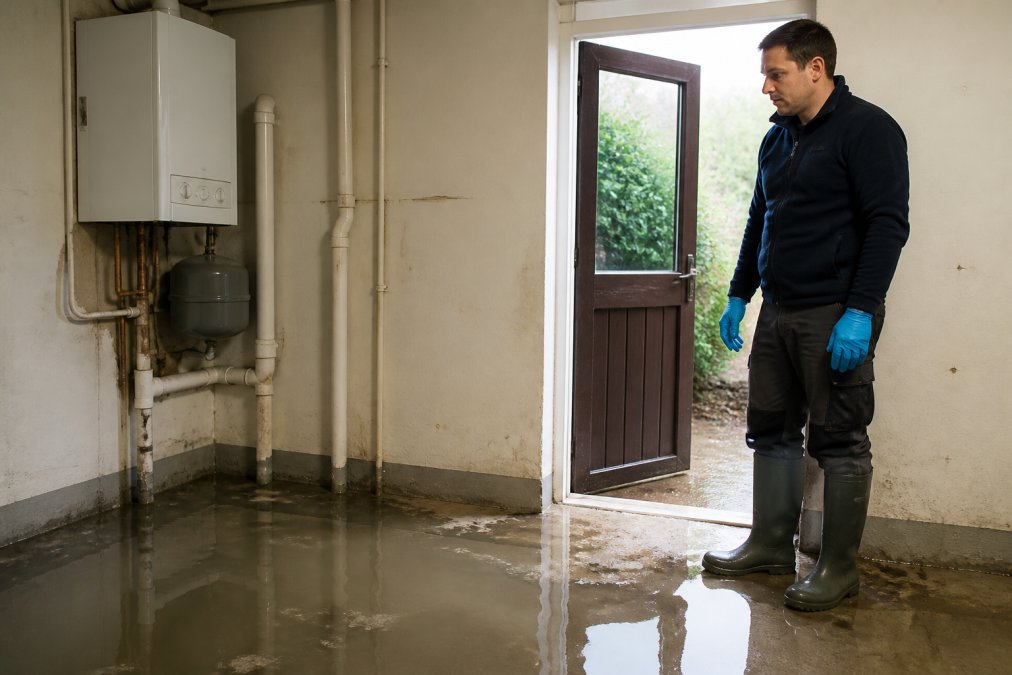
Practical precautions:
- Keep children and pets out of the room
- Switch off electricity to affected areas only if it is safe to reach the consumer unit without entering the water
- Wear PPE if you must pass through, and remove it before entering clean areas
- Contact a specialist provider for assessment
What Not to Do While Waiting for Help
Do not use a domestic wet vacuum, pressure washer or steam cleaner on blackwater. These spread pathogens as aerosols and push contamination deeper into soft furnishings and voids. Do not mix cleaning chemicals, and do not dry the space with household fans before decontamination, as this can distribute microbial growth through the property.
Preventing Sewage Backups in Commercial Plumbing Systems
Preventing sewage backups in commercial plumbing systems depends on routine drain maintenance, correct waste disposal and early detection. Commercial kitchens, washrooms and shared drainage all accumulate fat, wipes and debris faster than domestic systems, so scheduled drain cleaning matters more, not less.
A practical maintenance routine includes:
- Scheduled hydro-jetting of high-use lines
- Grease trap servicing at manufacturer-recommended intervals
- Fitting and emptying drain screens
- Staff training on what must never enter the drainage system
- Periodic CCTV surveys of the sewer lateral
Fat, oil, grease and “flushable” wipes are the most common causes of commercial sewer line blockage. Ignoring them leads to repeat backups, which raise both remediation costs and disruption to trading.
What Professional Sewage Cleanup and Decontamination Involves
Professional sewage cleanup and decontamination is a staged process, not a single deep clean. Each stage exists because the one before it would be undermined without it. Skipping or reordering stages is one of the most common reasons a property smells of sewage again weeks later.
1. Assessment and isolation
The provider surveys the affected area, identifies the source of the backup, and confirms whether the drainage issue has been cleared. Until the cause is resolved, any cleaning is temporary. The area is isolated with barriers or closed doors, and a plan is agreed for protecting unaffected rooms and shared spaces in flats or commercial premises.
2. Water extraction
Standing wastewater is removed using specialist extraction equipment rather than domestic wet vacuums. This is a distinct step from cleaning: extraction removes the bulk liquid, while cleaning addresses what remains on surfaces. Extracted wastewater must be disposed of appropriately, and a reputable provider will explain how this is handled.
3. Strip-out of contaminated materials
Porous materials that have absorbed blackwater usually cannot be reliably decontaminated and are removed instead. This commonly includes:
- Carpets, underlay and some hard flooring
- Plasterboard that has wicked moisture upward
- Insulation in affected wall cavities or under-floor voids
- Soft furnishings that cannot be laundered to a satisfactory standard
4. Cleaning and decontamination
Hard surfaces are cleaned and then treated with products appropriate to the contamination. Cleaning and decontamination are not the same thing: cleaning removes visible soil, while decontamination reduces microbial load. Both are needed, and the order matters.
5. Structural drying
After decontamination, the structure itself still holds moisture in floors, walls and voids. Structural drying uses controlled airflow and dehumidification to bring those materials back toward their normal moisture content. This is a separate discipline from cleaning, and it is the stage most often rushed in DIY attempts. Drying without prior decontamination can distribute microbial growth through the property.
6. Verification and post-remediation checks
Verification is where the process is confirmed rather than assumed. Depending on the incident, this may include:
- Moisture readings taken across affected materials and compared with unaffected reference areas
- Visual inspection of voids and cavities that were opened during strip-out
- Odour assessment after the space has been closed up for a period
- Air quality testing, where the provider or insurer considers it appropriate
How this differs from flood recovery work
Sewage incidents and wider flood incidents overlap but are not identical. Water extraction, cleaning, decontamination, structural drying, strip-out and building reinstatement are separate activities, and a property may pass through several of them in sequence. Our guide to flood damage cleaning and structural drying explains how those stages differ when the water is not sewage-contaminated, and why the two situations call for different assessments.
Extraction, cleaning, decontamination and drying are four different jobs. A quote that treats them as one is worth questioning before work starts.
Insurance, Documentation and the Emotional Impact of Sewage Contamination
Most household and commercial policies require prompt notification of a sewage incident, so contact the insurer early, ideally before strip-out begins. What you record in the first few hours often determines how smoothly the claim proceeds.
A documentation checklist for insurers
Before anything is removed or cleaned, work through the following where it is safe to do so. Do not enter contaminated areas to take photographs; use a doorway or window, or ask the provider to capture images as part of their assessment.
- Wide shots of each affected room, taken from outside the contamination zone
- Close-ups of the source, such as the overflowing fixture or the point where sewage entered
- The extent of spread, including skirting boards, door thresholds and any rooms the water reached
- Damaged items, photographed individually before disposal, with a note of what they were and roughly when they were purchased
- Receipts and invoices for any emergency measures, such as temporary accommodation or replacement of essential items
- A dated written log of what happened, when it was noticed, who was contacted and when
- The provider’s written scope and report, once available
The emotional impact is part of the incident
Common reactions include:
-
Difficulty sleeping, particularly if the affected area is near a bedroom
-
A heightened sense of disgust around food preparation and washing
-
Anxiety about whether the property is genuinely clean, even after work is finished
-
Frustration during the insurance process, which can feel slower than the emergency itself
-
Tell your insurer or provider that the emotional impact is affecting daily life, so the response accounts for it
-
Ask the provider to explain what has been done and how it was verified, rather than accepting a general reassurance
-
Keep routines as normal as possible in unaffected parts of the home
-
Speak to your GP if low mood, anxiety or sleep problems persist
A written scope from the provider, plus your own dated photo log, is usually the strongest combination when a claim is reviewed. Keep both somewhere you can find them later.
If you would like help finding a specialist provider for sewage cleanup, decontamination or structural drying, TrustedCare can put you in touch with vetted professionals.
Frequently Asked Questions
How can I tell the difference between a minor drain blockage and a sewage backup?
A single slow or gurgling drain often points to a local blockage in that fixture’s trap or branch pipe. A sewage backup usually affects more than one outlet, produces a foul odour, and may push wastewater up through showers, baths or floor gullies. If the water looks brown or contains solids, or if several drains are affected at once, treat it as blackwater contamination and arrange a professional assessment before using any water in the property.
What are the main sewage backup health risks?
Wastewater can carry bacteria such as E. coli and salmonella, viruses, parasites and other pathogens. Contact with contaminated surfaces or breathing aerosolised droplets can cause gastrointestinal illness, skin and eye infections, and respiratory symptoms. People with weakened immune systems, young children, older adults and pregnant women face higher risk. UKHSA and NHS guidance stresses hand hygiene, protective clothing and keeping unprotected people away from affected areas until decontamination is complete.
Can I clean up a sewage spill myself with household products?
Small spills from a single toilet with clear water may be manageable with gloves and careful disinfection, but any backup involving blackwater, multiple drains or soaked porous materials should not be treated as a DIY job. Household bleach does not reliably decontaminate sewage-affected plaster, insulation or timber, and porous items often need removal. Professional sewage cleanup uses extraction, disinfection and drying equipment that most homes and businesses do not have.
Will my insurance cover professional sewage cleanup?
Many UK home and commercial policies include escape-of-water cover that extends to sewage, but the wording varies. Report the incident promptly, photograph and video the damage before anything is moved, keep receipts for emergency costs, and avoid disposing of damaged items until your insurer confirms. Ask your insurer whether they have an approved contractor list. If your claim is declined, ask for the decision in writing so you can seek advice.
Sewage contamination is rarely a problem that improves with time or a household clean. If any of the signs above are present, the safest next step is a professional assessment. TrustedCare can connect you with specialist sewage cleanup providers who handle assessment, decontamination and structural drying, and who can document the work for your insurer. Contact TrustedCare for confidential specialist cleaning advice.
