Specialist Cleaning for Sewage Incidents: What to Expect
What happens during assessment, wastewater removal, cleaning, decontamination, controlled drying and handover after sewage enters a property.
Confidential specialist assistance across England, Scotland and Wales
Specialist sewage cleaning normally involves making the area safe, identifying the source and spread, extracting wastewater, removing materials that cannot be retained, cleaning before disinfection, drying the structure and documenting the work. Sewage should not be treated as an ordinary mopping or deep-cleaning job.
What Counts as a Sewage Incident?
A sewage incident occurs when foul water or wastewater enters an area where it should not be. This can include a backed-up toilet, wastewater rising through a shower or floor drain, a blocked sewer connection, a septic-system failure or external floodwater contaminated by sewage.
The visible puddle may be only part of the problem. Wastewater can travel beneath flooring, into wall bases, through service penetrations and into porous materials. The response therefore depends on what the water touched and where it travelled, not simply how much remains visible.
Internal backup
Wastewater returns through a toilet, shower, sink or floor drain because of a blockage or drainage failure.
External flooding
Floodwater enters from roads, drains, watercourses or overloaded sewers and may contain mixed contamination.
Hidden spread
Contamination reaches underlay, floor voids, plasterboard, insulation, cupboards or neighbouring areas.
Water can appear clearer after solids settle while contamination remains. Persistent odour can also indicate that wastewater or affected porous material remains beneath the visible surface.
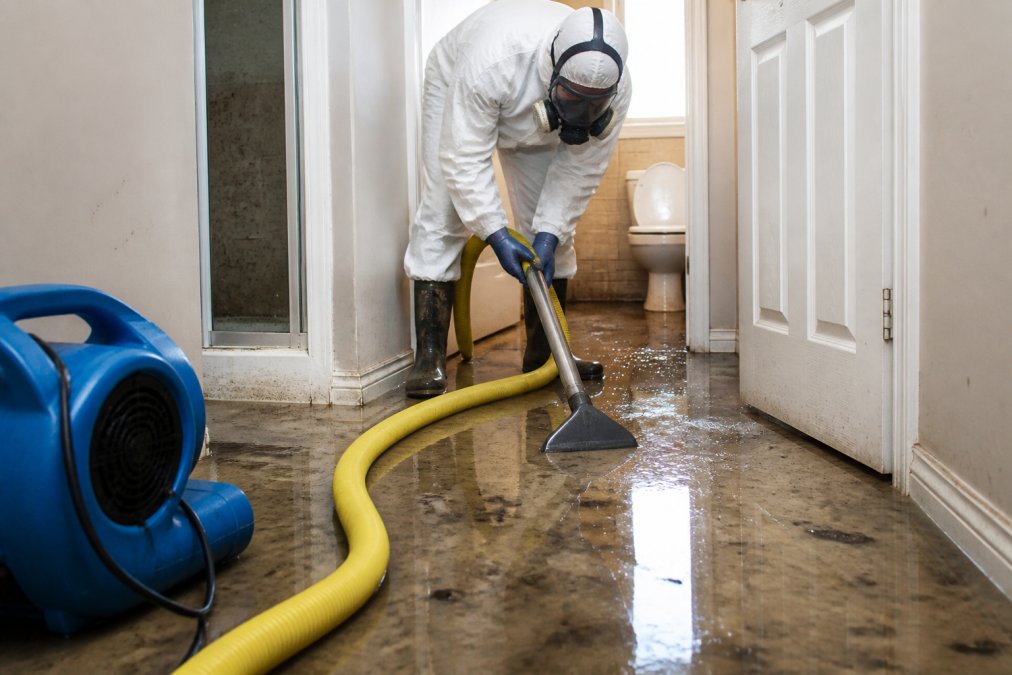
Health Risks From Sewage Exposure
Sewage may contain harmful microorganisms and other contaminants. Exposure can occur through direct skin contact, accidental ingestion, contact with broken skin or droplets produced by splashing and unsuitable cleaning methods. Gastrointestinal illness, skin problems and irritation are among the possible effects.
Children, older people, pregnant people and anyone with a weakened immune system should remain away from an affected area. Anyone who becomes unwell after exposure should seek appropriate medical advice and explain that sewage contact occurred. Use NHS 111 for urgent medical advice when it is not a life-threatening emergency; call 999 for a medical emergency.
Domestic vacuum cleaners, pressure washers and uncontrolled fans can spread contamination. A wet-and-dry vacuum should not be used unless it is suitable for contaminated material and operated under an appropriate professional method.
Immediate Safety Precautions Before Help Arrives
- Keep children, pets and visitors out of the affected area.
- Stop using affected toilets, sinks, showers and appliances.
- Do not walk through wastewater unless essential for immediate safety.
- Do not use a domestic vacuum, pressure washer or ordinary floor fan.
- Do not touch electrical equipment or switches in a wet area.
- Photograph damage from a safe position for the insurer.
- Tell the water company or drainage provider if the source is ongoing.
- Follow emergency-service and utility-provider instructions.
If electricity may be affected, do not enter the wet area to reach the consumer unit. Contact the electricity network operator, an electrician or the emergency services as appropriate. If sewage is escaping into the environment or affecting public land, report it to the relevant water company or environmental authority.
Need Specialist Sewage Cleaning?
TrustedCare provides sewage-contamination cleaning, flood cleaning and structural-drying support for homes, rental properties and managed buildings.
The Sewage Decontamination Process
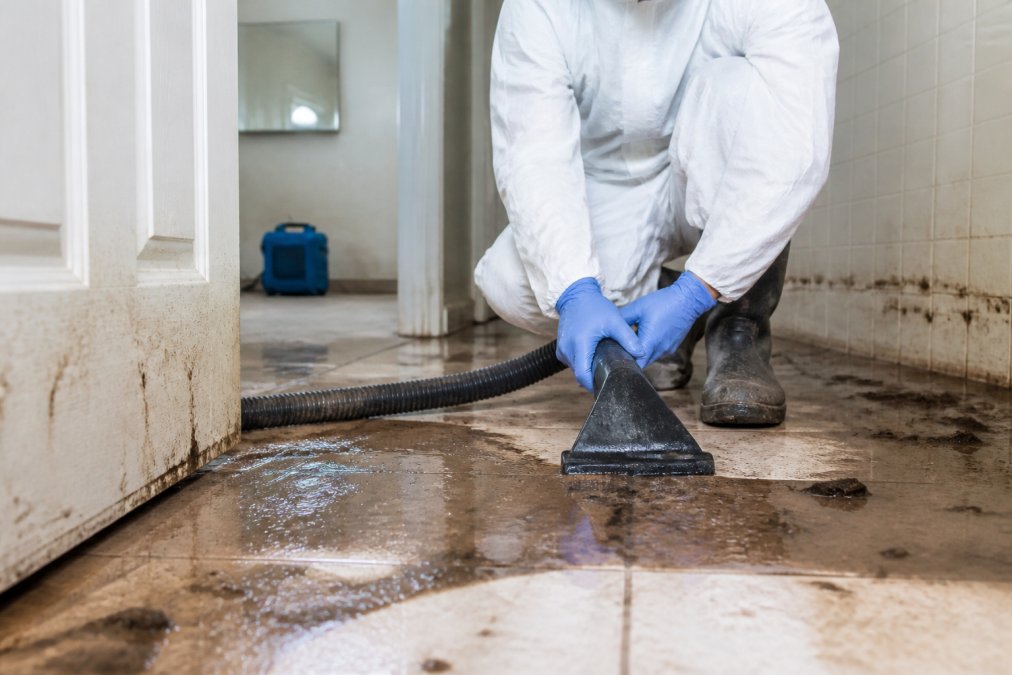
The exact scope depends on the source, affected materials, time elapsed and property construction. A typical professional sequence is:
| Stage | What normally happens | Why it matters |
|---|---|---|
| Assessment | The source, affected area, property hazards and material types are reviewed. | Defines containment, equipment, removals and the written scope. |
| Containment | Access is controlled and clean areas are protected. | Reduces transfer by people, tools and airflow. |
| Extraction | Standing wastewater and recoverable solids are removed using suitable equipment. | Reduces the contamination load before detailed cleaning. |
| Material removal | Unsuitable affected carpets, underlay, plasterboard, insulation or other porous materials may be removed. | Eliminates material that cannot be reliably cleaned or dried in place. |
| Cleaning | Organic matter and visible residue are removed from retained surfaces. | Disinfectants are less reliable when surfaces remain dirty. |
| Disinfection | An appropriate product is applied according to its instructions and required contact time. | Reduces microorganisms after physical cleaning. |
| Structural drying | Suitable air movement and dehumidification are installed and monitored. | Reduces retained moisture and supports safe repair. |
| Handover | The provider records completed work, remaining limitations and next steps. | Supports the owner, landlord, insurer and repair contractor. |
Cleaning, Disinfection and Odour Treatment
These are different stages. Cleaning physically removes solids, organic material and residue. Disinfection follows cleaning and uses an appropriate product under defined conditions. Odour treatment addresses remaining odour sources after contaminated material has been removed or treated.
Spraying disinfectant over dirt or wastewater does not complete the job. Product concentration, coverage and contact time matter, but so does prior removal of the material that shields microorganisms. Fragrance and fogging should never replace source removal and physical cleaning.
A quotation should separate extraction, material removal, cleaning, disinfection, waste, drying, monitoring and reinstatement. “Sewage cleanup” alone is too vague to compare accurately.
Why Structural Drying Matters
Even after wastewater is removed and surfaces are cleaned, moisture can remain inside floors, wall bases, timber and voids. Drying may require air movers, dehumidifiers and repeated moisture measurements. Equipment should be selected and positioned for the property rather than supplied as a fixed package.
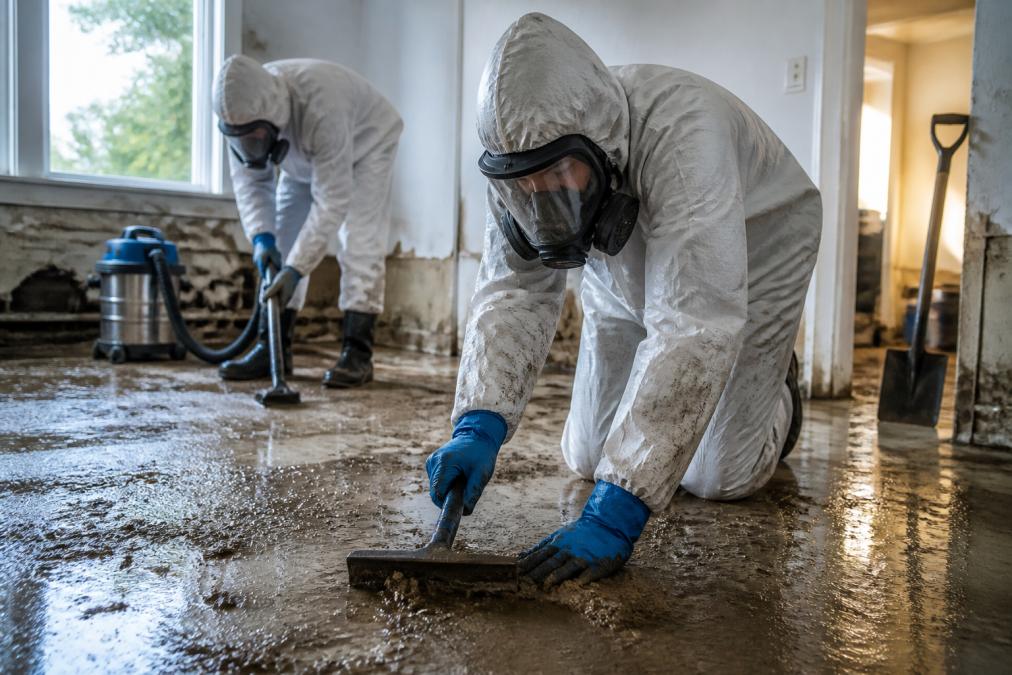
Cleaning and decontamination should be addressed before contaminated areas are exposed to uncontrolled air movement. Drying completion should be based on suitable readings and the construction involved, not simply the number of days equipment has operated.
Does Home Insurance Cover Sewage Damage?
Cover varies between insurers and policies. A sudden sewage backup may be considered under escape-of-water, accidental-damage or another policy section, but exclusions can apply for poor maintenance, gradual deterioration, repeated ingress or issues outside the insured property.
Contact the insurer promptly and ask:
- whether the cause and resulting damage are potentially covered;
- whether an appointed contractor or loss adjuster must attend;
- what immediate mitigation can be authorised;
- whether damaged items may be removed after documentation;
- what photographs, reports, readings and invoices are required; and
- whether cleaning, drying and reinstatement are treated separately.
Keep the claim number, photographs, written approvals, provider scope, moisture logs, waste records and itemised invoices. Necessary emergency action does not guarantee that every cost will be reimbursed, so preserve a clear approval trail wherever circumstances allow.
DIY vs Professional Sewage Cleaning
Professional assessment is the safer choice when sewage has reached absorbent materials, moved beyond a small hard-surface area, entered a void or affected a rental, workplace or communal building.
Contact a specialist if any of the following apply:
- carpet, underlay, timber, plasterboard or insulation is affected;
- wastewater has travelled beneath flooring or into cavities;
- more than one room or a shared area is involved;
- the source is a sewer, septic system or external flood;
- the contamination has remained for an extended period;
- electrical or structural hazards may be present;
- vulnerable occupants use the property; or
- formal records are required by an insurer, landlord or employer.
A very small, immediately contained incident on a non-porous surface may not require full remediation, but personal safety, hidden spread and appropriate waste handling still need consideration. When uncertain, send safe photographs and ask a specialist to assess the circumstances.
Related guidance: signs professional sewage cleanup is needed, emergency sewage-cleanup booking and sewage-cleanup costs in the UK.
Choosing a Specialist Cleaning Provider
A suitable provider should ask about the source, timing, affected materials, access and hazards before confirming the likely scope. Check:
- relevant sewage and contaminated-water experience;
- suitable public and employers’ liability insurance;
- a site-specific risk assessment and written method;
- clear arrangements for affected waste and removed materials;
- separate explanations of cleaning, disinfection and drying;
- an itemised written scope with exclusions;
- a process for approving additional work; and
- handover records, readings and reports appropriate to the job.
A company that promises a guaranteed final price without adequate photographs or an assessment may be overlooking hidden spread. The useful question is not only “How much?” but “What exactly does that price include?”
Frequently Asked Questions
What are the health risks from sewage exposure?
Sewage may contain microorganisms and other contaminants capable of causing illness or irritation. Avoid direct contact and aerosol-producing cleaning. Seek medical advice if symptoms develop after exposure and explain what happened.
Does home insurance usually cover sewage cleanup?
Some policies cover eligible sudden sewage backups and resulting damage, while exclusions and approval requirements vary. Check the exact wording and contact the insurer promptly.
Why must cleaning happen before disinfection?
Dirt and organic matter can prevent a disinfectant from reaching the surface effectively. Physical removal and cleaning therefore come before application at the correct concentration and contact time.
Can sewage-contaminated carpet be saved?
Carpet and underlay affected by sewage often require removal because they are absorbent and difficult to decontaminate reliably in place. The decision depends on the material, extent and incident circumstances.
How long does sewage cleanup take?
Extraction and initial cleaning may be relatively quick, but material removal, structural drying, monitoring and reinstatement can extend the overall recovery. The provider should explain each stage separately.
When is the property safe to use again?
Reoccupation depends on the affected area, cleaning and drying results, remaining hazards and any repairs required. Ask the responsible contractor or property professional for a documented handover rather than relying only on appearance or smell.
Arrange Specialist Sewage Cleaning
Contact TrustedCare with the postcode, wastewater source, rooms affected, time since discovery and any insurer or access requirements.
