How to Book Emergency Cleaning: A UK Guide
A practical guide to assessing the immediate risk, choosing the correct specialist, preparing information and coordinating emergency work with an insurer or property manager.
Confidential specialist assistance across England, Scotland and Wales
Keep people away from the affected area, deal with any immediate danger, contact the relevant authority or insurer where required, and give the cleaning provider the postcode, incident type, affected rooms, known hazards and access details. Confirm the written scope, cost basis and realistic attendance window before booking.
When Emergency Cleaning Is Needed
Emergency specialist cleaning is appropriate when contamination, water or damaged materials may create an immediate risk to occupants, workers or the property. It is different from booking a routine domestic deep clean.
Floodwater or sewage
Standing water, sewage, drain backups or external floodwater may require extraction, decontamination and structural drying.
After-death contamination
Blood, bodily fluids, decomposition residue or persistent odour require discreet specialist assessment.
Trauma or bodily fluids
Visible contamination after an accident or incident should not be handled as an ordinary cleaning task.
Urgent property risk
Rapid action may be necessary where water is continuing to spread or contamination is affecting shared areas.
Routine deep cleaning removes ordinary dirt, dust, grease and general grime. Specialist emergency cleaning may require risk assessment, controlled access, task-specific PPE, water extraction, removal of affected porous materials, decontamination, regulated waste handling and documented drying.
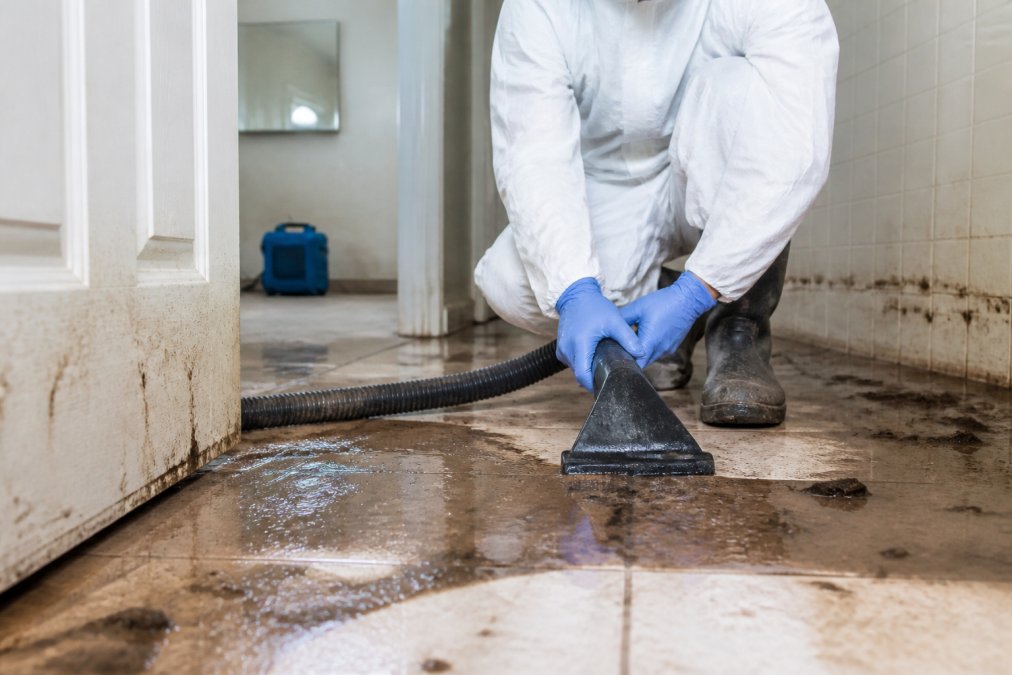
How to Book Emergency Cleaning: Step by Step
- Deal with immediate danger. Call 999 where there is a threat to life, fire, suspected gas, electrical danger or another active emergency.
- Keep people and pets away. Do not enter standing water, sewage or visibly contaminated rooms.
- Establish access authority. Confirm that police, the coroner, landlord, owner or another responsible party has released the area where relevant.
- Contact the insurer. Report the incident promptly and ask whether approval, photographs or a particular claims process is required.
- Contact a relevant specialist. Choose a company experienced in the actual incident type rather than a general cleaner.
- Provide clear information. Share the postcode, source, affected areas, timing, hazards, access and photographs where safe.
- Ask for the cost basis. Confirm whether the initial visit is chargeable and how labour, equipment, waste and repeat visits are priced.
- Agree the scope in writing. Check what is included, excluded and subject to inspection or insurer approval.
- Confirm attendance. Obtain the expected arrival window, contact name and instructions for keys or access.
- Keep the records. Retain the quotation, approval, photographs, reports, moisture readings, waste records and invoice.
Photos and a telephone description can support an initial estimate, but concealed contamination, saturated materials and restricted access may only become clear during assessment. Ask how any variation will be authorised before extra work begins.
Information the Cleaning Company Will Need
Good information helps the provider send the correct team and equipment. You should be ready to provide:
- the full address and postcode;
- the type and source of contamination;
- when the incident began or was discovered;
- the rooms and materials affected;
- whether water or contamination is still spreading;
- known electrical, structural, chemical or sharps hazards;
- parking, stairs, lifts, shared entrances and key arrangements;
- police, coroner, landlord or insurer restrictions;
- photographs or video where these can be taken safely; and
- the name of the person authorised to approve work.
Need Help Arranging Specialist Cleaning?
TrustedCare provides after-death cleaning, flood damage cleaning, structural drying and contamination support across England, Scotland and Wales.
Preparing for the Cleaner’s Arrival
Only prepare the property if doing so is safe. Do not move contaminated belongings simply to create space. Useful preparations can include:
- keeping children, visitors and pets away from the affected zone;
- not touching, vacuuming or washing contaminated materials;
- isolating the water supply if there is a controllable leak and it is safe to do so;
- following the electricity supplier, fire service or emergency-services instructions;
- photographing visible damage from a safe position;
- moving unaffected valuables only when this can be done without entering contamination;
- making keys and access information available; and
- telling the team about vulnerable occupants and known hazards.
Do not discard damaged or contaminated items before they have been photographed and the insurer has given instructions, unless keeping them creates an immediate safety risk. Record any urgent removal and retain the provider’s paperwork.
Emergency Flood and Sewage Cleaning
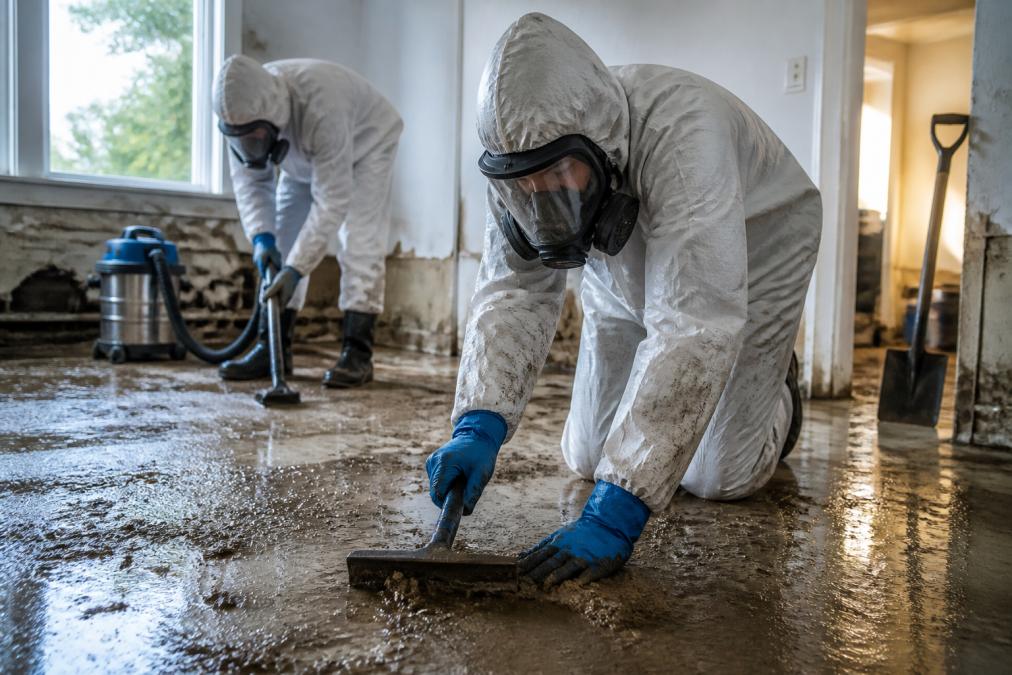
Flood work is not one task. It may involve stopping the source, extracting standing water, removing debris, cleaning, decontaminating, assessing affected materials and then drying the building. Reinstatement such as plastering, flooring and decoration normally follows after drying is confirmed.
What affects response time?
- Location and travel: postcode, traffic and safe road access affect mobilisation.
- Regional demand: widespread storms can create simultaneous demand for teams and drying equipment.
- Water source: sewage and external floodwater require additional controls.
- Property access: flats, shared entrances, parking limits and restricted working hours can slow attendance.
- Equipment requirements: extraction, air movement, dehumidification and specialist access equipment must be matched to the property.
- Insurer instructions: some chargeable work may need authorisation before it begins.
A responsible provider should give a realistic arrival window after checking the details rather than guaranteeing an unsupported response time. For more detail, read when to call professional cleaners after a flood and the emergency sewage-cleanup booking guide.
The flood-restoration sequence
| Stage | What normally happens | Evidence worth keeping |
|---|---|---|
| Initial assessment | Source, safety, contamination, materials and access are reviewed. | Photographs, incident details and initial readings. |
| Extraction and removal | Standing water, debris and agreed unsalvageable materials are removed. | Removal log, photographs and waste records where relevant. |
| Cleaning and decontamination | Silt and residue are removed before appropriate treatment. | Scope, products and areas treated. |
| Structural drying | Air movers and dehumidifiers are installed and monitored. | Equipment schedule and moisture readings. |
| Drying completion | Readings are reviewed before equipment is removed. | Final readings and completion report. |
| Reinstatement | Building repairs and decoration are arranged separately. | Repair scope, approvals and invoices. |
What to Do After an Unattended Death
Do not enter or disturb the affected area until the police, coroner or other relevant authority has completed its work and access has been released. Keep other people and pets away, avoid moving belongings and contact the property insurer or responsible party when appropriate.
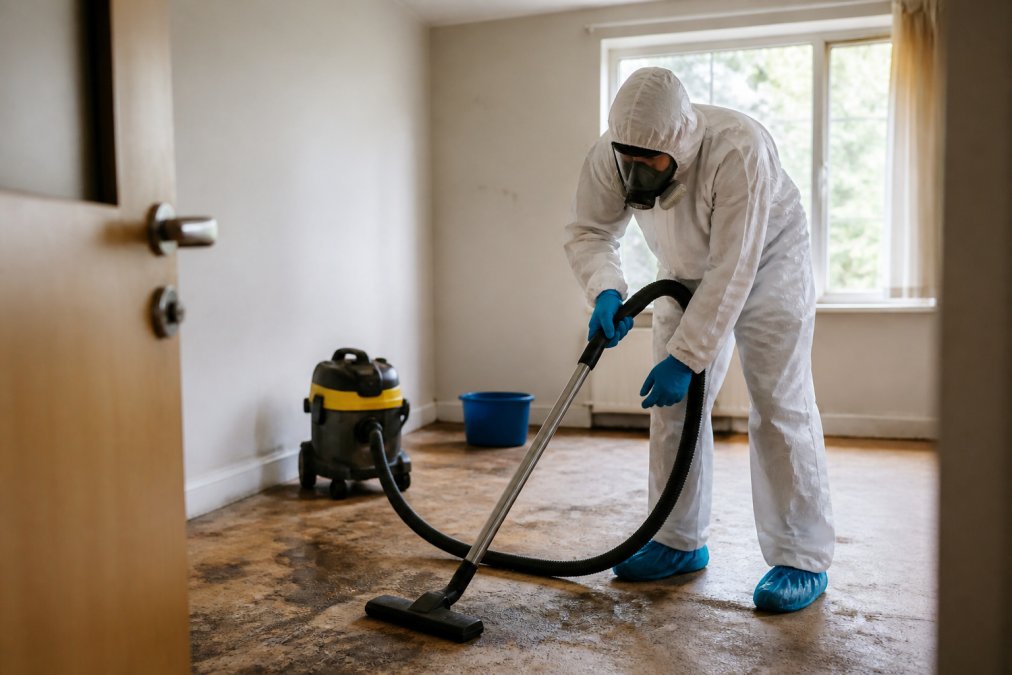
Specialist after-death cleaning may include:
- a site-specific risk assessment and controlled access;
- identification of visible and likely concealed contamination;
- agreed removal of affected carpets, underlay, furnishings or flooring;
- cleaning and treatment of suitable retained surfaces;
- source-based odour treatment after contamination is addressed;
- appropriate packaging, transport and disposal of affected waste; and
- records for the family, estate, landlord or insurer.
Timescales depend on the affected area, time before discovery, material penetration, access, waste and whether repeat treatment or building work is required. A contained incident may be completed relatively quickly; extensive decomposition contamination can require several stages. See what trauma-scene cleaning involves for further guidance.
Booking Around an Insurance Claim
Insurance cover depends on the policy, incident, exclusions, excess and insurer’s decision. Contact the insurer promptly and ask what immediate mitigation you may carry out, whether a loss adjuster will attend and what evidence is required.
| Stage | Typical action | Useful record |
|---|---|---|
| Report | The policyholder reports the incident. | Claim number and call notes. |
| Assess | The insurer, adjuster or appointed contractor reviews the damage. | Photographs and assessment report. |
| Scope | The specialist sets out proposed cleaning, removal and drying. | Written scope and quotation. |
| Approve | The paying party confirms authorised work. | Written approval and limitations. |
| Complete | Work is carried out and changes are documented. | Work records, readings and waste paperwork. |
| Settle | The insurer assesses eligible costs under the policy. | Itemised invoice and completion report. |
Emergency action may be necessary to prevent further damage, but that does not automatically mean every cost will be covered. Ask the insurer to confirm its requirements and keep a clear approval trail. The Association of British Insurers provides general consumer information about flooding and insurance.
How to Choose an Emergency-Cleaning Provider
Choose using evidence rather than response-time claims alone. Ask the company:
- Do you routinely handle this incident type?
- Can you provide suitable insurance details?
- Who will attend and supervise the work?
- How will the affected area be assessed and contained?
- How are waste and unsalvageable materials handled?
- What written report or readings will I receive?
- What is excluded from the quoted price?
- How are additional costs approved?
- Does the work include drying or reinstatement?
- What is the realistic attendance window?
The Health and Safety Executive’s COSHH guidance explains the general duty to assess and control risks from hazardous substances at work. Our separate guide explains how to vet specialist cleaning companies.
A credible provider will put the scope, pricing basis, exclusions and expected records in writing. If important details remain verbal or unclear, pause before authorising the work.
Frequently Asked Questions
How quickly can emergency cleaners attend?
Attendance depends on the postcode, traffic, team and equipment availability, access and regional demand. Ask for a realistic arrival window based on the actual booking rather than relying on a general advertising claim.
Should I contact my insurer before booking?
Contact the insurer as soon as reasonably possible. Ask whether approval or an appointed supplier is required. Where urgent work is needed to prevent further damage, record what was done, why it was necessary and who authorised it.
Can a company quote from photographs?
Photographs can support initial triage and an estimate, but they may not reveal concealed contamination, saturated materials or access problems. Confirm whether the figure is fixed or subject to a site assessment.
What should I do while waiting?
Keep people and pets away, avoid touching contaminated materials and follow emergency-service, utility-provider, landlord or insurer instructions. Do not enter standing water or an area with electrical, structural or biological hazards.
Does emergency cleaning include building repairs?
Not necessarily. Cleaning, decontamination, structural drying, strip-out and building reinstatement are distinct stages. The written scope should state exactly which stages are included.
What records should I receive?
Depending on the job, useful records may include the written scope, before-and-after photographs, removal and waste information, moisture readings, equipment logs, completion notes and an itemised invoice.
Arrange Emergency Specialist Cleaning
For after-death cleaning, flood damage cleaning, structural drying or contamination support, contact TrustedCare with the postcode and a brief description of the situation.
