How Long After Death Does Smell Start?
Decomposition odour can begin within 24–72 hours. Temperature, ventilation and the condition of the property can all affect how quickly the smell develops.
When a person dies, natural decomposition begins and gases are released as the body breaks down. These gases create the strong odours often associated with decomposition.
Many people wonder how long it takes before a smell develops inside a property following a death. The timing can vary depending on environmental conditions, temperature and whether the property is ventilated.
In some situations, the smell may begin to develop relatively quickly, particularly in warm indoor environments.
Decomposition odour can begin within 24–72 hours after death, depending on temperature, humidity and the environment where the body is located. In warmer conditions the smell may develop sooner, while cooler environments may slow the process.
Once decomposition begins, odours can spread through soft furnishings, flooring and structural materials inside the property.
Factors That Affect When Decomposition Smell Starts
Several factors influence how quickly decomposition odour develops inside a property.
Temperature
Warm environments accelerate decomposition. In heated properties or during warm summer conditions, odours may begin much sooner.
Ventilation
Poor ventilation allows gases to build up inside a room, making the smell stronger and more noticeable.
Surface Materials
Carpets, mattresses and soft furnishings absorb biological fluids and odours more easily than hard surfaces.
Time Before Discovery
The longer a person remains undiscovered, the more decomposition progresses and the stronger the smell can become.
Indoor Versus Outdoor Environment
Decomposition inside an enclosed property usually produces more noticeable and persistent odours because there is limited air circulation.
Why Decomposition Odours Persist
Decomposition odours are caused by gases and organic compounds released during the natural breakdown process.
These odours and associated contamination can penetrate materials such as:
- carpets and underlay
- mattresses and upholstered furniture
- wooden flooring and subfloors
- insulation
- skirting boards
- wall cavities and surrounding structural materials
Because these odours can soak into porous and structural materials, they may remain inside a property even after the deceased person has been removed.
This is why normal household cleaning products, air fresheners and surface cleaning are often unable to remove decomposition smells completely.
Unsure Whether Specialist Cleaning Is Needed?
TrustedCare can discuss the condition of the property, explain the likely next steps and provide a clear quotation if professional cleaning is required.
How Professional Cleaning Removes Decomposition Odour
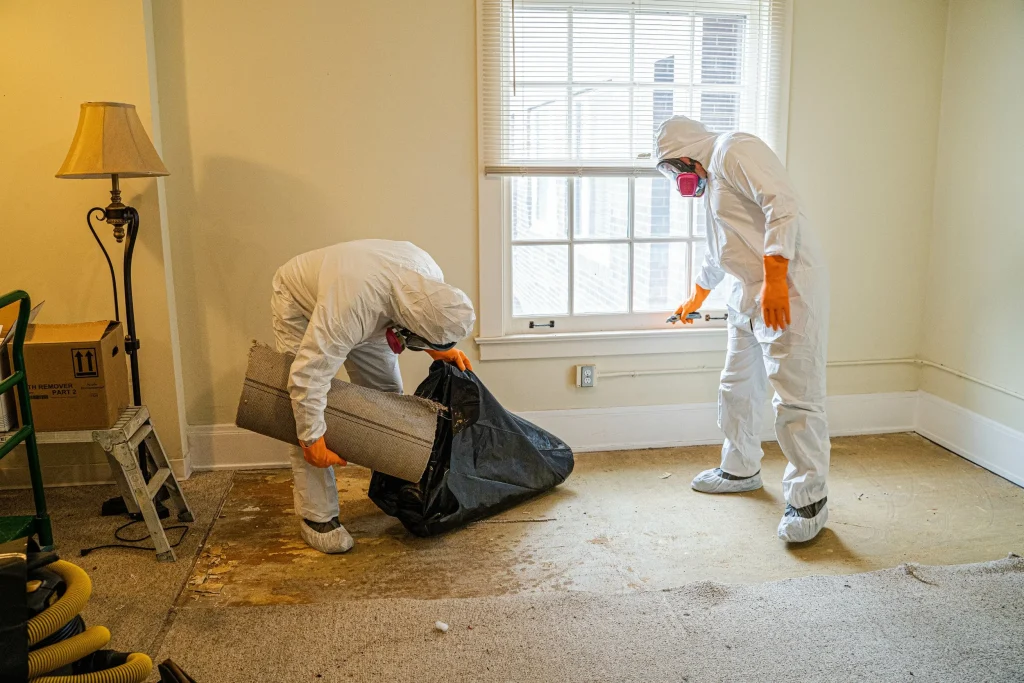
Specialist cleaning teams use professional biohazard-cleaning procedures to remove contamination and treat persistent odours.
Depending on the condition of the property, professional cleaning may include:
- identifying the full extent of the affected area
- removing contaminated furnishings and materials
- deep cleaning and disinfecting affected surfaces
- treating flooring and subfloor contamination
- using professional air filtration where appropriate
- specialist odour neutralisation
- safe handling and disposal of biohazard waste
Professional equipment and cleaning agents are designed to deal with biological contamination safely and restore the property to a safer condition.
You can learn more about professional after-death cleaning services and what the cleaning process may involve.
When Professional Cleaning Is Required
Professional biohazard cleaning is often required following an unattended death, particularly where decomposition has progressed before discovery.
In these situations, biological contamination may spread into flooring, underlay, furniture, subfloors and structural materials. Specialist cleaning may be necessary even when the visible contamination appears to be limited to one area.
Professional help should be considered when there are bodily fluids, persistent decomposition odours, contaminated furnishings or evidence that fluids have reached flooring or structural materials.
Further information is available in TrustedCare’s guide to unattended-death cleaning .
Need Discreet After-Death Cleaning Support?
Contact TrustedCare for confidential advice about contamination, persistent decomposition odour or cleaning following an unattended death.
View TrustedCare’s after-death cleaning service
TrustedCare Editorial Team publishes UK guidance on specialist cleaning and biohazard remediation, including after-death cleaning, flood restoration, and contamination control. Content is written for homeowners, landlords, housing providers, and facilities teams seeking clear, practical information.