Decomposition produces gases and organic compounds during the natural breakdown process. These can create an extremely strong and persistent odour inside a house, flat or other enclosed property.
There is no single fixed period for how long decomposition smell lasts. If biological fluids or odour-producing contamination have entered absorbent materials, the smell may remain for weeks or even months until the affected materials and underlying surfaces are properly treated.
The short answer
Decomposition smell inside a property can last from several days to several months. The duration depends on the temperature, ventilation, time before discovery and whether contamination has entered carpets, underlay, furniture, flooring or structural materials.
What affects how long decomposition smell lasts?
The following factors can influence the strength and persistence of the odour.
Temperature
Warm conditions accelerate decomposition. Heated properties and hot weather can cause odours to develop more quickly and become considerably stronger.
Ventilation
Poor ventilation allows gases and odours to accumulate. Opening windows may temporarily reduce the smell but will not remove its source.
Affected materials
Carpet, underlay, mattresses, upholstered furniture, timber and insulation can absorb contamination and retain odours.
Time before discovery
Where a person has remained undiscovered, decomposition may progress and contamination can spread beyond the immediately visible area.
Extent of contamination
Odour may continue when biological fluids have reached flooring, subfloors, skirting boards, wall cavities or other concealed surfaces.
Cleaning already attempted
Air fresheners and ordinary cleaning products may mask the smell briefly without dealing with contaminated materials underneath.
Why can decomposition odour remain after the deceased has been removed?
Removing the deceased does not necessarily remove the source of the odour from the property. Biological fluids and decomposition compounds may have entered materials in and around the affected area.
These can include:
- carpets and underlay
- mattresses and upholstered furniture
- wooden flooring and subfloor materials
- laminate flooring and joints
- skirting boards
- plasterboard and wall cavities
- insulation and other porous building materials
Odour can continue to be released from these materials even when visible contamination has been wiped away. This is why surface cleaning alone may be insufficient.
Will opening windows remove decomposition smell?
Ventilation can make the odour less noticeable temporarily by allowing gases to escape and fresh air to enter. However, opening windows does not remove contamination from flooring, furniture or structural materials.
If the smell returns after the property has been ventilated, this can indicate that an odour source remains inside the affected area.
Why ordinary cleaning products may not work
Domestic disinfectants, bleach, scented sprays and carpet cleaners are not designed to identify or remove contamination hidden underneath flooring or inside porous materials.
Attempting to mask the smell can also make it harder to establish where the odour is strongest. Where bodily fluids or decomposition contamination are present, unnecessary contact with affected materials should be avoided.
How specialist cleaning removes decomposition odour
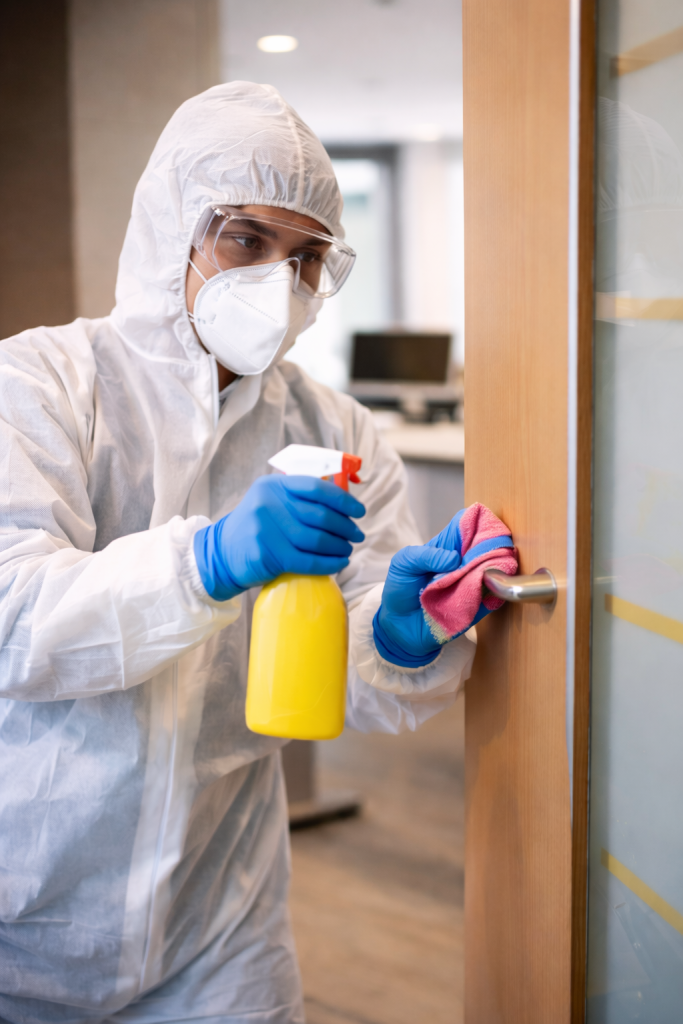
Effective odour treatment begins by identifying and dealing with the original source. Depending on the condition of the property, professional work may include:
- assessing the full extent of the affected area
- removing contaminated furniture and soft materials where necessary
- lifting affected carpet and underlay
- inspecting and treating flooring or subfloor surfaces
- cleaning and disinfecting affected hard surfaces
- using professional air filtration or odour-control equipment where appropriate
- handling and disposing of contaminated waste safely
Odour-control equipment should not be treated as a substitute for removing the contamination source. If affected materials remain untreated, the smell may return.
Unsure whether specialist cleaning is needed?
TrustedCare can discuss the condition of the property, explain the likely next steps and provide a quotation if specialist after-death cleaning is required.
VIEW AFTER-DEATH CLEANING SERVICESWhen should professional help be considered?
Professional advice should be considered when:
- there is visible biological contamination
- a person remained undiscovered for a period of time
- the odour remains after ventilation
- carpets, mattresses or upholstered furniture were affected
- fluids may have reached flooring or structural materials
- the affected area cannot be safely cleaned using normal household methods
Not every death inside a property requires specialist cleaning. Where there is no biological contamination, ordinary cleaning may be sufficient. The condition of the individual property should determine what work is required.
Where the death was not discovered immediately, read TrustedCare’s guide to unattended-death cleaning.
Can decomposition smell return after cleaning?
Yes. Odour may return if contaminated material remains underneath flooring, inside furniture or within another concealed area. Temperature changes can also make residual odours more noticeable.
A smell that repeatedly returns should be investigated rather than repeatedly covered with fragrances or air fresheners.
Related guidance
Frequently asked questions
How long can decomposition smell remain inside a house?
The smell may remain for several days, weeks or months. It can continue until contaminated materials and underlying surfaces have been properly treated.
Will decomposition smell eventually disappear on its own?
The smell may reduce over time, but odour can remain or return when biological contamination has entered porous or concealed materials.
Does opening the windows remove decomposition odour?
Opening windows may temporarily reduce the concentration of odour inside the room, but it does not remove contamination from affected materials.
Can decomposition fluid go through flooring?
Yes. Biological fluids may pass through carpet and underlay and reach floorboards, subfloors, joints or other surfaces underneath.
When is specialist after-death cleaning needed?
Specialist cleaning may be needed where bodily fluids, decomposition contamination, persistent odours or affected porous materials are present.
Need discreet after-death cleaning support?
Contact TrustedCare for confidential advice about decomposition contamination, persistent odour or cleaning following an unattended death.

TrustedCare Editorial Team publishes UK guidance on specialist cleaning and biohazard remediation, including after-death cleaning, flood restoration, and contamination control. Content is written for homeowners, landlords, housing providers, and facilities teams seeking clear, practical information.