Quick answer: trauma scene cleaning is the controlled removal, cleaning and management of biological contamination following a death, accident or serious injury. It may include removing affected materials, disinfecting retained surfaces, treating odour and arranging an appropriate waste route.
Trauma scene cleaning is not simply ordinary domestic cleaning with stronger chemicals. The work may involve blood, bodily fluids, decomposition residue, contaminated furnishings and materials that cannot be safely restored.
The purpose is to identify the affected area, control exposure, remove contamination and document what has been completed. The exact process depends on the incident, property and materials involved.
What Trauma Scene Cleaning Means
Trauma scene cleaning is a specialist service for properties affected by potentially harmful biological material. It may be required after an unattended death, serious accident, suicide or violent incident.
The work can involve:
- Assessing the affected area and materials.
- Restricting unnecessary access.
- Removing visible biological contamination.
- Removing porous materials that cannot be reliably restored.
- Cleaning retained surfaces.
- Applying a suitable disinfectant where required.
- Treating decomposition-related odour.
- Packaging and transferring contaminated waste appropriately.
- Providing records of the agreed work.
The terms “trauma cleaning,” “biohazard cleaning,” “crime-scene cleaning” and “after-death cleaning” are sometimes used interchangeably. The exact scope should always be stated in the quotation rather than assumed from the service name.
When Is Trauma Scene Cleaning Needed?
Professional assessment is normally sensible where:
- Blood or bodily fluids affect more than a small, contained area.
- Contamination has entered carpet, underlay or flooring.
- A death remained undiscovered for an extended period.
- Decomposition odour is present.
- Walls, furniture or other porous materials are affected.
- Sharps or broken contaminated objects are present.
- The extent of contamination cannot be seen clearly.
- The property must be documented for an insurer, landlord or employer.
- Family members would otherwise have to manage a distressing scene.
Not every blood spill requires a complete property remediation. A limited incident on a sound, non-porous surface may need a smaller response. The correct decision depends on the amount, location, penetration and people who could be exposed.
Do not begin cleaning until police or another investigating authority has released the scene where an investigation is involved.
Do not use ordinary household equipment: domestic mops, reusable cloths and vacuum cleaners can transfer contamination into unaffected areas and create additional contaminated equipment.
Trauma Scene Cleaning vs Standard Deep Cleaning
| Comparison | Standard deep cleaning | Trauma scene cleaning |
|---|---|---|
| Main purpose | Remove routine dirt and improve general hygiene | Control and remove biological contamination |
| Typical substances | Dust, grease and ordinary household soiling | Blood, bodily fluids and decomposition residue |
| Risk assessment | Routine cleaning assessment | Incident-specific biological, chemical and sharps risks |
| Protective equipment | Selected for normal cleaning tasks | Selected according to identified exposure risks |
| Material removal | Usually limited | May include flooring, furnishings or sections of other materials |
| Waste handling | Mostly ordinary cleaning waste | Waste assessed, segregated and transferred according to its classification |
| Completion | Generally visual inspection | Inspection against the agreed remediation scope |
Trauma cleaning is not defined by using the strongest available chemical. Effective decontamination requires physical removal of visible material, correct product selection and observance of the stated contact time.
Where contamination has passed through carpet into underlay or the subfloor, treating only the visible surface is unlikely to address the complete problem.
The Trauma Scene Cleaning Process
No two incidents are identical, but the following stages commonly form part of the work.
- Scene release: confirming that the relevant authority has finished any required investigation.
- Initial assessment: identifying hazards, affected areas, materials and access requirements.
- Area control: preventing unnecessary entry and reducing cross-contamination.
- Source removal: removing biological material and items that cannot be restored.
- Physical cleaning: removing remaining visible contamination and soiling.
- Disinfection: treating retained surfaces where required using a suitable product and contact time.
- Odour treatment: addressing the source and remaining odour after contaminated materials have been dealt with.
- Waste transfer: packaging and transferring waste through an appropriate route.
- Completion check: inspecting the work against the agreed scope and recording any limitations.
A limited scene may be completed relatively quickly. Extensive contamination affecting structural materials can require several visits, material removal, drying or later reinstatement.
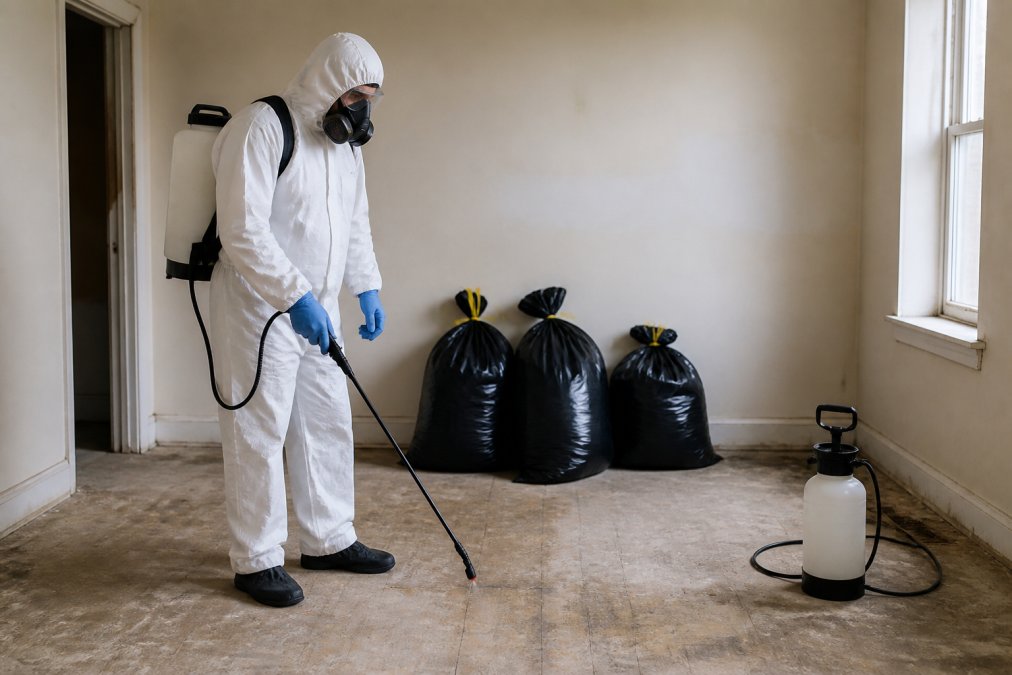
Need Confidential Specialist Help?
TrustedCare provides after-death and trauma-cleaning support across the UK. Contact them to discuss the circumstances and appropriate next step.
Health and Safety Considerations
Workers may be exposed through broken skin, splashes to the eyes or mouth, sharps injuries or contaminated hands and equipment. Employers and contractors must assess these risks and select suitable controls.
Controls may include:
- Restricting access to the work area.
- Removing hazards rather than relying only on disinfectant.
- Safe procedures for sharps and broken glass.
- Disposable gloves, protective clothing and eye protection.
- Respiratory protective equipment where the assessment identifies a need.
- Handwashing and technician-decontamination arrangements.
- Separating clean equipment from contaminated equipment.
- Procedures for reporting and responding to exposure incidents.
Full respiratory protection is not automatically required for every trauma-cleaning task. Protective equipment should be selected according to the exposure risk and used by someone trained in its limitations.
The Health and Safety Executive provides guidance on risk assessment and controlling workplace risks and blood-borne viruses in the workplace.
How Is Trauma-Cleaning Waste Handled?
Not all waste from a trauma scene has the same classification. It may include ordinary non-hazardous waste, offensive waste, infectious waste, sharps or chemicals. The correct route depends on its contents and associated risks.
A contractor should be able to explain:
- How the waste will be assessed and segregated.
- What packaging or containers will be used.
- Who will transport it from the property.
- Whether the carrier has the appropriate registration.
- Where the waste will be taken.
- What transfer or consignment documentation will be supplied.
Official information is available in the government guidance on hazardous-waste disposal. Waste requirements differ between England, Scotland, Wales and Northern Ireland, so the applicable national rules must be followed.
Before booking: ask whether waste packaging, transport and disposal are included in the quotation. A low initial price can increase substantially if these charges are added later.
Odour Treatment and Cleaning Verification
Odour following decomposition is often caused by contamination held within porous materials or concealed layers. Fragrance and air treatment alone cannot compensate for a source that remains in place.
A suitable process normally addresses:
- The contaminated source.
- Affected porous materials.
- Retained hard surfaces.
- Concealed areas identified during assessment.
- Ventilation and remaining air quality concerns.
Completion may involve visual inspection, review of the removed materials and other checks agreed within the scope. ATP monitoring can indicate the amount of organic residue on a tested surface, but it does not identify a specific pathogen or prove that an entire property is sterile.
Be cautious of absolute promises such as “100% germ free” unless the provider can explain exactly what was tested, where and by what method.
Who Arranges and Pays for Trauma Scene Cleaning?
There is no single rule applying to every property. Responsibility depends on ownership, occupation, tenancy arrangements, the incident and any insurance cover.
Owner-Occupied Property
The homeowner or the deceased person’s representative will often arrange the work. Buildings or contents insurance may assist where the incident falls within the policy, but specialist cleaning is not automatically covered.
Rented Property
The landlord, tenant, estate or insurer may be involved. Responsibility can depend on the tenancy agreement, cause of the contamination and work required to protect the building. Neither party should assume responsibility without checking the facts and relevant agreement.
Housing Association or Council Property
The housing provider should be contacted promptly. It may have approved contractors and procedures for managing the property and supporting the occupants.
Commercial or Workplace Incident
The employer, business operator, landlord, insurer and health-and-safety advisers may all need to be involved. The scene should not be disturbed until any police, regulator or internal investigation permits cleaning to begin.
Police and Emergency Services
Police and emergency services manage their operational and investigative responsibilities. They do not normally provide or fund the later cleaning of a private property.
Before authorising work:
- Contact the insurer or broker.
- Confirm who can approve the work.
- Obtain a written scope and quotation.
- Check whether material removal and waste are included.
- Clarify whether building reinstatement is separate.
See our guides to who pays for trauma scene cleaning and the average cost of trauma cleanup.
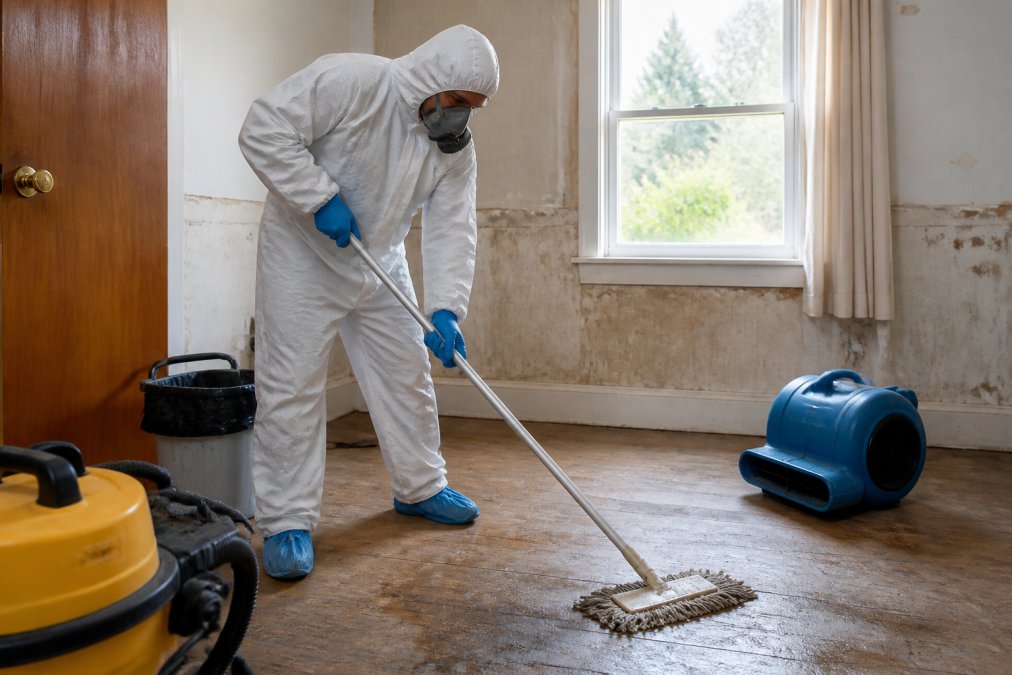
How to Choose a Trauma-Cleaning Provider
Ask prospective providers:
- Whether their insurance covers the proposed work.
- What relevant training the attending technicians have completed.
- How they will assess and control the work area.
- Which materials may need to be removed.
- How clean and contaminated areas will be separated.
- What cleaning and disinfecting process is proposed.
- Who will transport and receive the waste.
- What documentation will be provided.
- Whether odour treatment is included.
- How additional work will be approved and priced.
There is no single universal UK licence that automatically proves competence for every type of trauma cleaning. Relevant training, insurance, documented procedures, safe waste arrangements and experience with the particular incident are more meaningful checks.
Frequently Asked Questions
What does trauma scene cleaning involve?
It can involve assessment, area control, removal of biological contamination, removal of unsalvageable materials, cleaning, disinfection, odour treatment, waste transfer and a completion inspection.
Is trauma cleaning different from deep cleaning?
Yes. Deep cleaning addresses routine dirt and hygiene. Trauma cleaning manages biological contamination and may require specialist protective measures, material removal and controlled waste handling.
Can a family member clean a trauma scene?
A small, contained incident may not require full remediation, but extensive blood, decomposition or contamination of porous materials presents greater risks. Professional assessment also prevents relatives from having to manage a distressing scene themselves.
Who cleans a property after the police leave?
The property owner, landlord, estate representative, employer or insurer normally arranges the cleaning once the scene has been released. Police do not usually provide the later property-cleaning service.
Does insurance cover trauma scene cleaning?
It may do where the incident falls within the policy’s insured risks, but limits and exclusions vary. Contact the insurer before substantial work begins whenever circumstances allow.
How long does trauma scene cleaning take?
A limited incident may be completed relatively quickly. Extensive contamination affecting flooring, walls, furniture or concealed areas can take longer and may require several stages.
Need Trauma or After-Death Cleaning?
For confidential specialist assistance, contact TrustedCare to discuss the property, circumstances and appropriate next step.
