Practical UK Safety Guide
How to Assess Biohazard Risk: A UK Step-by-Step Guide
A clear framework for identifying contamination hazards, deciding who could be exposed, selecting proportionate controls and recognising when a property requires specialist assessment.
The article is general information, not a substitute for a site-specific assessment by a competent person.
A biohazard risk assessment is a structured way to identify biological contamination, decide how people could be harmed and choose controls that match the circumstances. It should reduce exposure before work begins—not justify entering an area that may already be unsafe.
For workplaces, employers and other duty holders must assess and control relevant risks. In a home, a resident can use the same basic questions to recognise warning signs and decide when to stop, isolate the area and obtain professional advice.
Keep people and pets away where there may be sharps, decomposition, sewage, unknown chemicals, unsafe electricity, structural damage, fire residues or a strong unexplained atmosphere. Make initial observations from a safe position and contact the appropriate emergency service, utility, landlord, insurer or specialist where necessary.
The Difference Between a Hazard and a Risk
A hazard is something with the potential to cause harm. A risk considers how likely that harm is and how serious the outcome could be in the actual circumstances.
For example, a discarded needle is a hazard. The risk changes according to whether it is sealed in a sharps container, hidden under waste, lying in a public walkway or being handled by an untrained person. The same principle applies to bodily fluids, sewage, contaminated water, mould and animal waste.
The Health and Safety Executive describes risk management as a five-part process: identify hazards, assess risks, control risks, record findings and review controls. This guide applies that framework to property contamination.
Source
What caused the contamination, and has the source stopped or is it continuing?
Exposure
Who could encounter it, by which route and for how long?
Extent
Is it contained on a cleanable surface or spread through porous and concealed materials?
Controls
Can access be prevented and the hazard removed without creating more exposure?
Competence
Does the person assessing or cleaning understand the hazard, equipment and limitations?
Evidence
What observations, photographs, readings and records support the decision?
Step 1: Identify the Hazards
Begin by gathering information without disturbing the affected area. The aim is to identify known and reasonably foreseeable hazards, including dangers that are not biological.
Information to collect from a safe position
- the event or source, such as sewage escape, unattended death, animal infestation or flooding;
- the rooms, contents and building materials visibly affected;
- how long the contamination or moisture may have been present;
- whether the source has stopped;
- whether electricity, gas, structural damage or standing water is involved;
- the presence of sharps, broken glass, chemicals, medicines or unknown powders;
- odours, visible growth, staining, insects or other indicators of concealed spread; and
- possible routes into adjoining rooms, flats, ducts, floors or wall cavities.
Common materials that may contain biological agents include blood and bodily fluids, sewage, contaminated water, animal waste, clinical waste and soiled furnishings. HSE guidance confirms that COSHH can apply where workers are incidentally exposed to biological agents through their task or work environment.
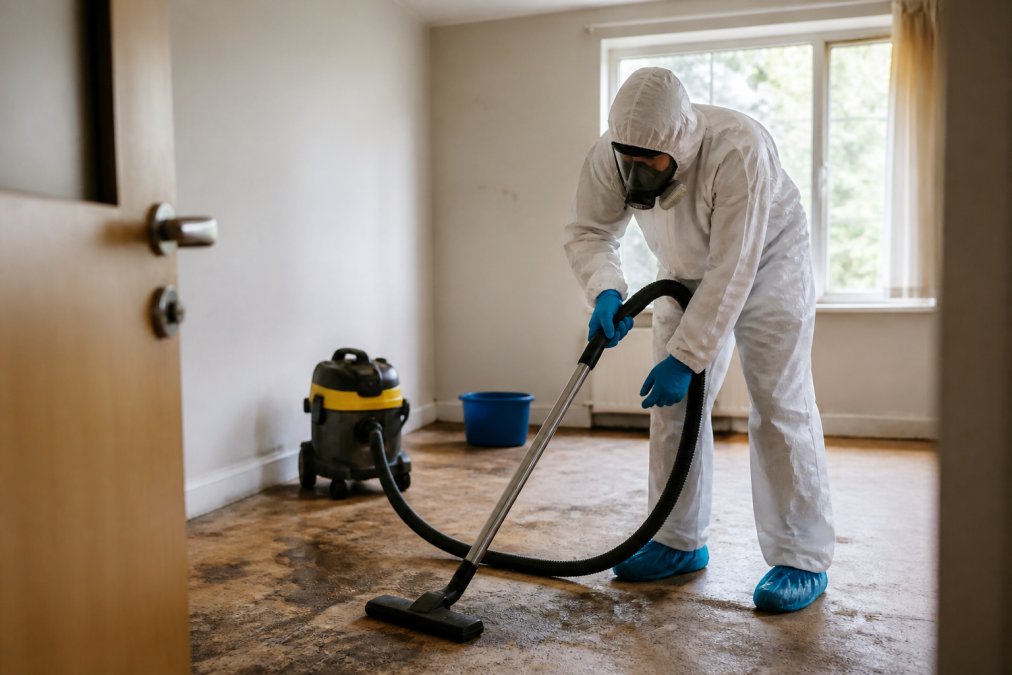
Images can help a landlord, insurer or contractor understand the scene, but nobody should cross contamination, disturb materials or enter an electrically or structurally unsafe area merely to take them.
Step 2: Assess Who Could Be Harmed and How
Consider everyone who could enter the area now or later—not only the person planning the cleanup.
- residents, family members and visitors;
- children and pets;
- cleaners and maintenance workers;
- housing, care or emergency personnel;
- contractors attending for plumbing, electrical work or repairs;
- neighbours or occupants sharing entrances, ventilation or drainage; and
- people who may be more susceptible because of health, age or pregnancy.
Possible exposure routes
| Route | Property example | Relevant questions |
|---|---|---|
| Skin or eye contact | Splashing contaminated water or touching an affected surface | Are there cuts, damaged skin or tasks likely to create splashes? |
| Sharps injury | Needles, broken glass or sharp metal hidden in waste | Can the area be inspected and cleared without hand sorting? |
| Ingestion | Contaminated hands touching food, cigarettes or the face | Are washing facilities and clean/dirty boundaries available? |
| Inhalation | Dust, droplets, mould spores or treatment aerosols | Will the proposed work create airborne material? |
| Transfer | Contaminated footwear, tools or waste moving through clean areas | How will access, equipment and waste routes be controlled? |
Risk is affected by the quantity and type of contamination, the task, the time spent in the area, the condition of the materials and the effectiveness of controls. It is rarely possible to identify every microorganism on sight, so the assessment should use reliable information and reasonable precautions rather than unsupported certainty.
Step 3: Control the Risks
Controls should reduce the hazard or exposure at source where reasonably practicable. Personal protective equipment is important in many situations, but it is not the first or only control.
A practical order of control
- Avoid or eliminate exposure. Keep people out, stop the source and arrange remote information gathering where possible.
- Isolate the area. Close doors, restrict access and prevent contaminated movement into clean spaces without creating other safety risks.
- Remove the hazard safely. Use appropriate containment, equipment and waste routes rather than handling contaminated materials unnecessarily.
- Use engineering controls. Depending on the task, this may include suitable extraction, containment or controlled airflow designed by a competent person.
- Use safe systems of work. Define clean and dirty zones, access routes, hygiene, equipment decontamination and emergency arrangements.
- Select task-specific PPE. Gloves, clothing, footwear, eye protection and respiratory protection must follow the assessment and be suitable for the wearer and task.
A generic statement such as “wear a mask” is not a complete control. Respiratory protective equipment must be suitable for the contaminant and task. Tight-fitting masks normally require an adequate face seal and appropriate face-fit arrangements for workplace use.
COSHH applies to hazardous cleaning and disinfecting products as well as relevant biological agents. Product safety information should inform, but not replace, the task-specific assessment.
Visible dirt and organic material can reduce the effectiveness of a surface treatment. The method should state what will be physically removed, what will be cleaned and what, if anything, will receive a subsequent treatment.
Unsure Whether a Property Needs Specialist Cleaning?
TrustedCare can discuss the circumstances, affected areas and likely next step. Do not enter an unsafe area to obtain photographs or measurements.
Step 4: Record the Findings
A useful assessment records enough information for another responsible person to understand the decision. For workplace assessments, legal recording requirements depend on the organisation and circumstances; keeping a clear record is sensible even where a particular form is not prescribed.
A site record may include
- the location, date and assessor;
- the event, source and affected areas;
- known and suspected hazards;
- people who could be harmed and possible exposure routes;
- existing controls and additional action required;
- who is responsible for each action and by when;
- access, isolation and emergency arrangements;
- photographs or readings obtained safely;
- uncertainties, inaccessible areas and assumptions; and
- the trigger or date for review.
The record should distinguish observation from inference. For example, “visible staining extends one metre across the floor” is an observation; “contamination has not entered the floor void” would be an assumption unless the void was properly assessed.
Step 5: Review the Controls
A risk assessment must change when the situation changes. Review it if new contamination is found, work exposes a concealed area, the source continues, a control fails, someone is exposed or the proposed method changes.
Questions for review
- Did the initial assessment identify the actual extent?
- Are the source and access restrictions still controlled?
- Have tasks created new splash, dust, aerosol or sharps risks?
- Are clean and dirty areas remaining separated?
- Is the selected PPE still suitable and being used correctly?
- Does additional work require new competence, equipment or authorisation?
- Have any incidents, near misses or symptoms been reported?
Where a worker suffers an exposure, follow the organisation’s first-aid and incident procedure and obtain appropriate medical advice. Whether a workplace incident must be formally reported depends on the facts and applicable requirements.
Examples for Common Property Incidents
After-death and decomposition contamination
The extent may not match the visible area. Fluids and odours can enter flooring, joints, furnishings and voids. Do not move affected items or attempt to locate concealed contamination without an appropriate plan. Read the UKBB guide to trauma-scene cleaning for more context.
Sewage and contaminated water
Consider the water source, spread, electrical risk, absorbent materials and whether contaminated water has entered cavities or adjoining areas. Extraction alone does not complete cleaning or decontamination.
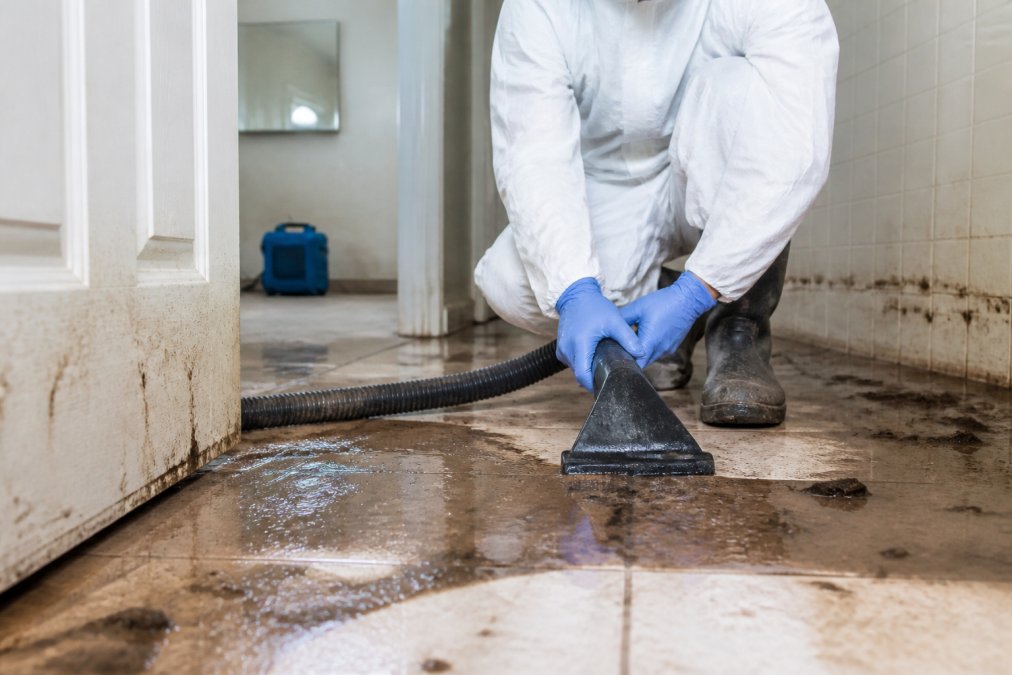
UK government guidance notes that floodwater can contain sewage, pollutants or other contaminants. It recommends protective clothing for cleanup and additional splash protection where the method creates significant splashing. Read what to expect from specialist sewage cleaning.
Flood damage
A flood assessment should separate source control, water extraction, cleaning, removal, decontamination, structural drying and reinstatement. The necessary stages depend on the water source, time, construction and affected materials. See when to call professional cleaners after a flood.
Mould after dampness or flooding
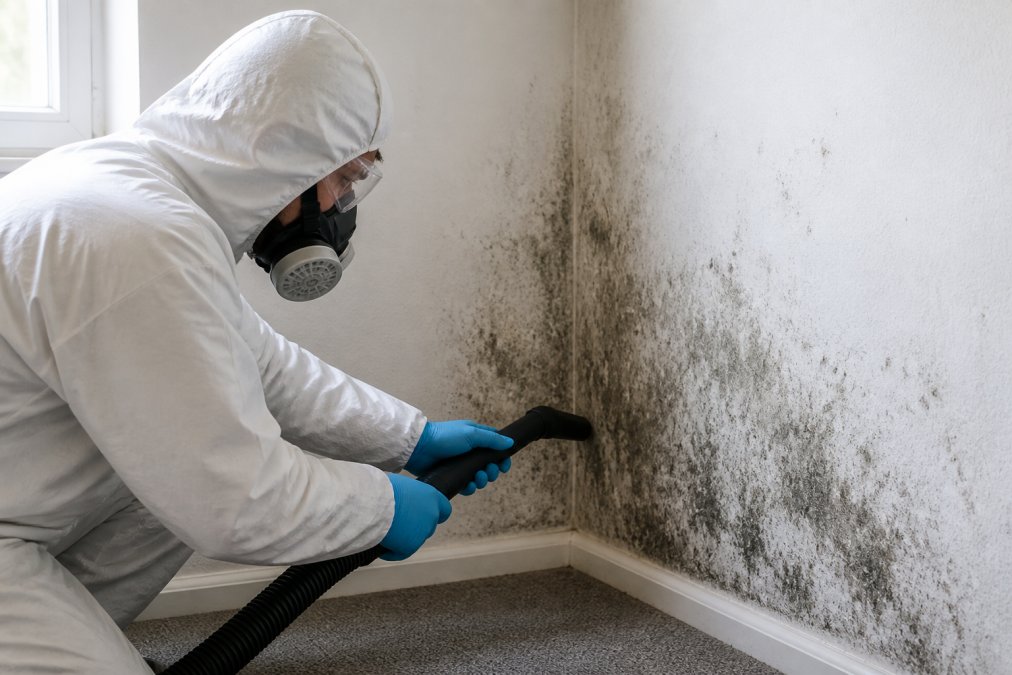
Visible mould is evidence of a moisture problem, but the correct response depends on the water source, extent, material condition, occupants and underlying building defect. Cleaning the surface without correcting moisture can lead to recurrence. Read about the signs professional mould removal may be needed.
Sharps and unknown substances
Do not hand-sort bags, bedding or waste where sharps may be concealed. Unknown powders, chemicals, medicines or drug-related materials require a cautious approach and may fall outside ordinary cleaning. Prevent access and obtain advice from the appropriate competent service.
When Professional Assessment Is Sensible
Professional assistance should be considered when the hazard or safe method is uncertain, specialist equipment is required or the consequences of a mistake are significant.
- decomposition or substantial bodily-fluid contamination;
- sewage affecting porous materials, several rooms or concealed areas;
- standing water combined with electrical or structural concerns;
- sharps, drug-related waste or unknown substances;
- contamination in a confined or poorly ventilated space;
- work likely to create dust, aerosols or extensive splashing;
- large or recurring mould growth after water damage;
- vulnerable occupants or shared residential areas;
- an insurance, landlord or employer requirement for documented work; or
- any situation where the person involved lacks suitable training, equipment or confidence.
Booking a specialist does not remove the need for questions. Ask how the area will be assessed, controlled, cleaned, dried and handed back, and what is excluded. UKBB’s emergency-cleaning booking guide explains what information to provide.
Not every stain or unpleasant smell is a serious biohazard. Equally, a small visible patch may not show the full extent. Good assessment avoids both complacency and exaggerated claims by linking the controls to evidence and uncertainty.
Verification and the Limits of Visual Checks
Visual inspection can confirm that accessible surfaces appear clean, but it cannot prove that concealed spaces are unaffected, that every microorganism has been removed or that wet building materials are dry.
Evidence should match the question
| Question | Potential evidence | Important limitation |
|---|---|---|
| Was visible contamination removed? | Inspection and before/after photographs | Does not assess inaccessible or concealed areas |
| Are materials drying? | Recorded moisture readings over time | Readings must suit the material and instrument |
| Was the agreed method completed? | Work record, products, equipment and areas treated | Documentation does not prove work outside its scope |
| Was waste transferred appropriately? | Relevant transfer or consignment documentation | The correct record depends on classification and jurisdiction |
| Can the property be occupied? | Site-specific assessment considering all relevant hazards | No single cleaning certificate decides every occupancy issue |
A handover should identify inaccessible areas, excluded work, remaining repairs and any continuing controls. Avoid absolute statements such as “completely sterile” unless a defined and appropriate verification method supports that exact claim.
Frequently Asked Questions
What are the five steps of a biohazard risk assessment?
A useful UK framework is to identify the hazards, assess who could be harmed and how, control the risks, record the significant findings and review the controls. The detail and competence required depend on the property, work and suspected contamination.
Does COSHH apply to biological hazards?
COSHH can apply where workers are deliberately or incidentally exposed to biological agents. It can also apply to hazardous cleaning or treatment products. The employer or other responsible duty holder should ensure the assessment is suitable for the actual work.
Can a householder carry out a biohazard risk assessment?
A householder can identify warning signs, prevent access and collect information from a safe position. That does not make them competent to enter, test or clean every type of contamination. Specialist or emergency advice is appropriate where significant hazards or uncertainty exist.
What PPE is needed for biohazard cleaning?
There is no single kit suitable for every task. Gloves, protective clothing, footwear, eye protection and respiratory protection may be required, but selection must follow the exposure assessment. PPE must fit, be compatible and be removed without spreading contamination.
Is a face mask always enough?
No. A basic face covering may not protect against the relevant airborne hazard. Where respiratory protective equipment is required for work, it must be suitable for the hazard and wearer; tight-fitting equipment normally requires an adequate seal and appropriate face-fit arrangements.
How is contaminated floodwater assessed?
Consider the source, time, affected materials, spread, occupants and electrical or structural hazards. Floodwater may contain sewage or other contaminants. Extraction, cleaning, decontamination, removal and drying should be treated as separate stages where they are required.
Can a property be declared safe from a photograph?
No. Photographs can show visible conditions but not reliably establish concealed contamination, moisture, electrical safety, structural condition or every exposure risk. A site-specific assessment may be required before occupation or work resumes.
When should a biohazard risk assessment be reviewed?
Review it when the circumstances change, new hazards are discovered, controls fail, an incident occurs, the work method changes or there is reason to believe the existing assessment is no longer adequate.
General information only: this article does not provide a site clearance, medical opinion or formal workplace risk assessment. Obtain competent advice for the specific property and circumstances.
Specialist Property Support
Concerned About Possible Biohazard Contamination?
TrustedCare can discuss the property, affected area and known circumstances and explain the likely next step. Do not enter an unsafe space simply to gather more information.
Discreet assistance across England, Scotland and Wales. Availability and scope are confirmed when you enquire.
