Practical UK Biohazard Guide
How to Clean Bodily Fluids Safely: A Practical UK Guide
A careful guide to assessing a spill, preventing exposure, cleaning suitable surfaces and recognising when contamination requires professional help.
This article provides general information, not a substitute for a site-specific risk assessment, medical advice or workplace procedure.
Bodily-fluid spills should be dealt with promptly and without unnecessary contact. The correct response depends on the fluid, the amount, the surface, whether sharps are present and whether the contamination has entered carpet, underlay, furniture or the building itself.
A small, recent spill on a sealed surface may sometimes be manageable with suitable precautions and a product intended for the task. A spill connected with a death, serious injury, unknown sharps, suspected infection or deep contamination is not routine household cleaning.
If blood or another potentially infectious fluid enters the eyes or mouth, rinse thoroughly with water. For a puncture or needlestick wound, gently encourage bleeding without scrubbing or sucking it, then wash with soap and water. Obtain urgent clinical advice and report workplace exposures through the relevant procedure.
Understanding the Actual Risk
Blood and bodily fluids can contain microorganisms, but the level and type of risk are not identical for every spill. Blood and visibly blood-stained fluids can present a blood-borne-virus risk. Vomit, faeces and other secretions may spread gastrointestinal or other infections depending on the circumstances.
Exposure is more likely where fluid reaches broken skin, the eyes, nose or mouth; where a contaminated sharp punctures the skin; or where cleaning spreads material to other surfaces. Intact skin is an important barrier, but gloves are still appropriate where contact is foreseeable.
Source
Is the fluid known, visibly blood-stained or associated with a known infection?
Quantity
Is this a small fresh spot or a substantial spill that has travelled beyond the visible edge?
Surface
Is it sealed and cleanable, or porous, damaged, jointed or difficult to access?
Exposure
Could anyone be splashed, cut or exposed through broken skin, eyes, nose or mouth?
Other hazards
Are there needles, broken glass, medicines, chemicals, electrical hazards or structural damage?
Setting
Does a workplace, care setting, school or rental property have a procedure that must be followed?
When Not to Clean It Yourself
Keep people and pets away and seek specialist advice where the situation includes:
- a death, decomposition or trauma scene;
- unknown or discarded needles and other sharps;
- a large spill or contamination across several surfaces;
- blood or fluid beneath flooring, behind skirting or inside furniture;
- significant contamination of carpet, underlay, mattresses or untreated wood;
- sewage or mixed contamination;
- persistent odour or an area that has already been cleaned unsuccessfully;
- a person at particular risk from infection; or
- a situation in which appropriate PPE, products, ventilation or waste arrangements are unavailable.
Do not enter a scene that remains under police or coroner control. Wait until the relevant authority has released it. Never pick up a discarded needle by hand or improvise a container that another person could be injured by.
A domestic vacuum, mop head, brush or reusable cloth can spread contamination to clean rooms and be difficult to decontaminate. Use disposable materials or equipment that has a planned cleaning and decontamination method.
Choosing Suitable PPE
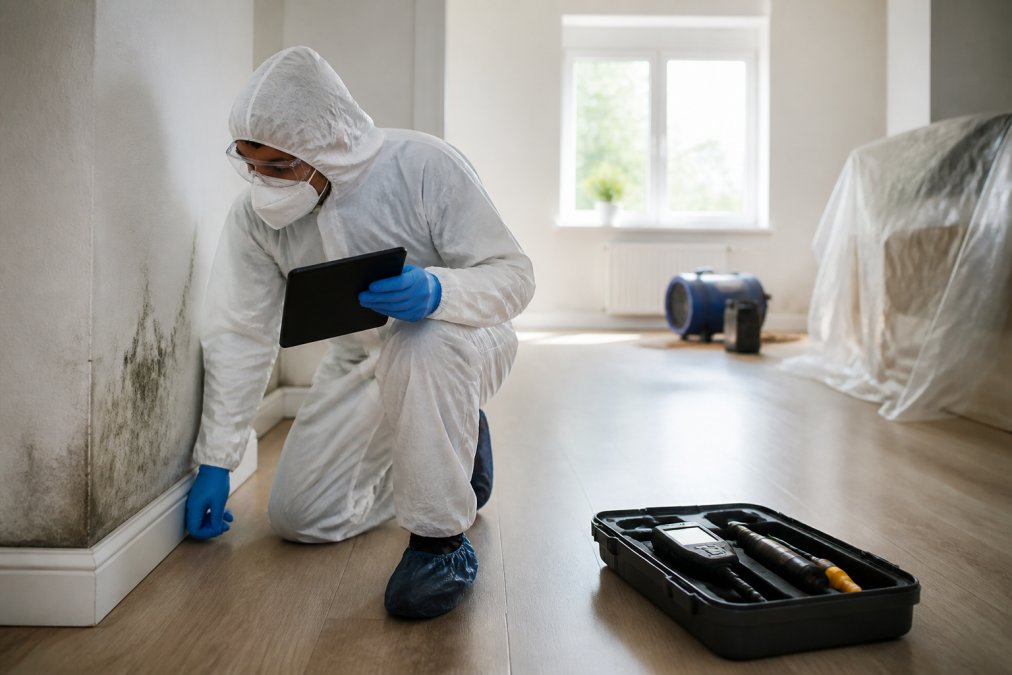
PPE should follow the task and splash risk. It does not make an unsuitable DIY job safe, and more PPE is not a substitute for limiting access and avoiding contact.
- Disposable gloves: use suitable single-use gloves and cover cuts or grazes with waterproof dressings.
- Disposable apron or protective clothing: use where clothes could be contaminated.
- Eye or face protection: use if splashing to the face is reasonably foreseeable.
- Foot protection: consider disposable overshoes or cleanable boots for an extensive floor spill.
- Respiratory protection: a generic face covering is not automatically required for a simple surface spill. Where the assessment identifies an inhalation or aerosol risk, the equipment must be suitable for that hazard and the wearer.
Remove disposable PPE without touching contaminated outer surfaces. Wash hands with soap and water after removing it, even if gloves appeared intact.
A Safe Sequence for a Minor Surface Spill
The following sequence is intended for a small, recent spill on a sound, cleanable surface where there are no sharps, no death or decomposition and no evidence that fluid has penetrated the material. Follow any applicable workplace or care-setting procedure instead of a general article.
- Restrict access. Keep people and pets away. Place a warning or barrier where others could walk into the area.
- Assess before touching. Identify the fluid, likely extent, surface type, splash risk and any glass or sharp objects.
- Ventilate where appropriate. Follow the cleaning-product label and avoid moving contaminated air or droplets into another occupied area.
- Put on task-appropriate PPE. At minimum this commonly includes disposable gloves; add apron and eye or face protection where the assessment requires them.
- Contain and absorb. Use disposable absorbent material, working carefully to prevent splashing or tracking.
- Collect debris safely. Use a scoop, scraper or tongs for solid material. Never use bare or gloved hands to collect sharp objects.
- Clean and disinfect. Use a compatible product and sequence suitable for the fluid and surface, following the manufacturer’s dilution, application and contact-time instructions.
- Allow the area to dry. Check joints and surrounding surfaces for fluid that travelled beyond the obvious mark.
- Package the waste correctly. The disposal route depends on its source, quantity, infection risk, chemicals and whether the setting is domestic or commercial.
- Remove PPE and wash hands. Avoid touching the face, phone, door handles or clean surfaces with contaminated gloves.
Unsure Whether the Spill Is Safe to Handle?
TrustedCare can discuss the fluid, affected materials and likely extent before you disturb flooring or furnishings.
Cleaning Products and Disinfectants
Visible organic material can reduce the performance of some disinfectants. Depending on the product and setting, guidance may specify a combined detergent-disinfectant or a cleaning stage followed by a compatible disinfectant. Do not assume that spraying a chemical onto an unclean surface completes the job.
Check the label and safety information for:
- the organisms and application for which the product is intended;
- the correct dilution or ready-to-use instructions;
- the required wet contact time;
- surface compatibility;
- ventilation and PPE requirements; and
- storage, expiry and disposal instructions.
Mixing bleach or another chlorine-releasing product with acids, ammonia or other cleaners can release dangerous gases. Urine can also react with some chlorine-based products. Use only a product and method that its manufacturer confirms are suitable for the specific spill and surface.
Steam, extraction equipment and liquid-vacuum methods also require an appropriate method and decontamination plan. They can spread contamination or contaminate the machine if used incorrectly.
Hard and Porous Surfaces
| Surface | Main concern | Practical decision |
|---|---|---|
| Sealed tile or vinyl | Grout, joints and perimeter gaps may allow fluid below the surface | Clean and disinfect the surface using a compatible method, then check edges and damage |
| Laminate or sealed wood | Fluid can enter seams, swell boards or affect the layer beneath | Surface treatment may be inadequate if the spill remained or travelled into joints |
| Carpet and rugs | Backing and underlay can remain contaminated after the pile looks clean | Assess every affected layer; significant penetration may require controlled removal |
| Upholstery | Seams, padding and foam are difficult to reach and dry | A removable cover may be treatable, but affected internal foam may not be reliably restorable |
| Mattress | Fluid can enter deep layered materials that cannot be inspected | Replacement is often more practical where contamination has passed through the cover |
| Untreated wood or plasterboard | Porous building materials absorb fluid and odour | Professional assessment may identify sections requiring removal rather than surface treatment |
A stain disappearing is not proof that every affected layer has been cleaned. If fluid can be seen or smelled beneath a finish, or the underside cannot be accessed, stop and obtain advice before sealing, painting or installing new flooring over it.
Waste and Sharps Disposal
Not every used glove, cloth or hygiene item is automatically infectious clinical waste. Classification depends on the source, known or suspected infection, type and quantity of contamination, chemicals present and the activity that produced it. Workplace and professional cleaning waste should be assessed and segregated under the applicable waste arrangements.
For household waste, follow local-authority instructions. Some councils provide clinical-waste or sharps collections, and arrangements differ by area. Never place loose needles or other sharps in an ordinary refuse bag or recycling container.
- Keep waste contained and away from children, animals and clean items.
- Do not compress a bag containing material that could puncture it.
- Use an approved sharps container and arranged collection route for needles.
- Do not use recycling for contaminated disposable materials.
- Commercial waste must be transferred through an appropriate authorised route with the required records.
Government guidance distinguishes infectious clinical waste from non-infectious offensive or hygiene waste. If classification is uncertain, ask the local authority or a specialist waste contractor rather than guessing.
Workplace Responsibilities
An employer should assess foreseeable exposure to blood or bodily fluids, provide suitable training and equipment, maintain spill and exposure procedures and arrange the correct waste route. Relevant controls may fall under COSHH and wider health-and-safety duties.
A workplace plan should explain:
- who is trained and authorised to respond;
- how the area will be isolated;
- which spill kit and PPE are suitable;
- how sharps will be managed;
- which disinfectant and contact time apply;
- how waste will be classified, packaged and collected;
- what to do after a splash, puncture or other exposure; and
- how incidents will be recorded and reviewed.
The Health and Safety Executive provides detailed guidance on blood and bodily-fluid spill decontamination and responding to a workplace exposure incident.
Why After-Death Contamination Is Different
Cleaning after a death is not the same as responding to a small fresh spill. Decomposition fluids can pass through bedding, carpet and underlay into floorboards or a subfloor. Odour can remain in affected porous materials even after the visible surface has been wiped.
An unattended-death scene may also contain sharps, medication, insects, inaccessible contamination and materials requiring controlled removal. Relatives and property managers should not lift flooring or move affected furniture merely to discover how far contamination extends.
Read the independent guides to after-death cleaning in the UK, unattended-death cleaning and trauma-scene cleaning.
What Professional Cleaning May Involve
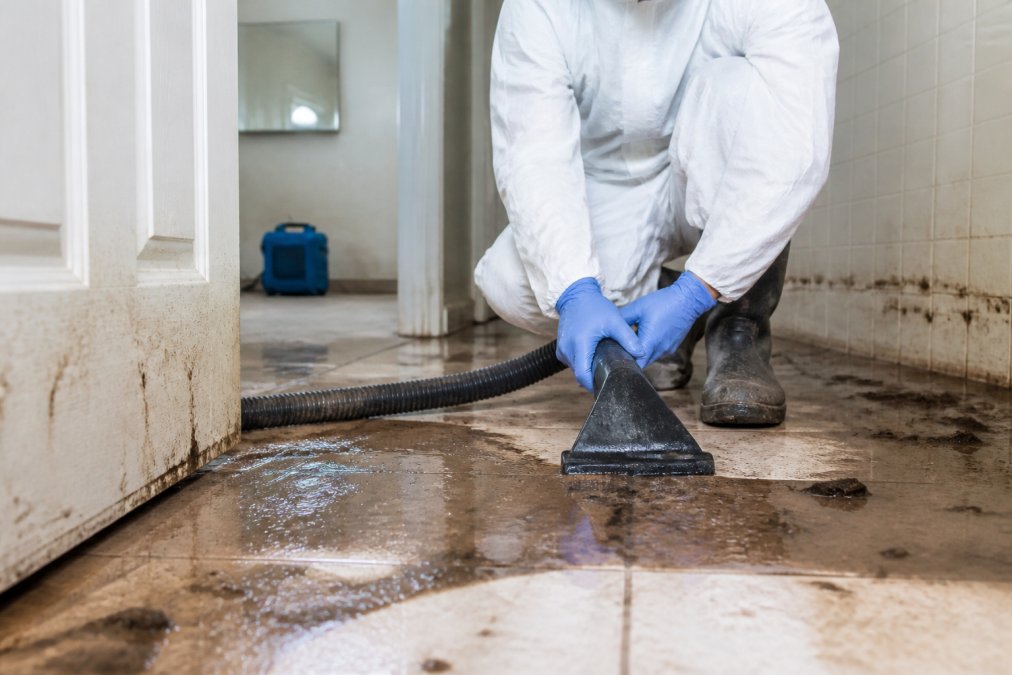
The scope should reflect the incident and materials rather than applying the same treatment to every property. A professional response may include:
- obtaining the incident history and confirming that the area has been released for cleaning;
- assessing visible and likely concealed contamination and other hazards;
- restricting access and establishing clean and contaminated work areas;
- selecting task-specific PPE, equipment and products;
- removing bulk contamination without spreading it;
- lifting or removing porous materials that cannot be reliably restored;
- cleaning and disinfecting retained surfaces using a documented method;
- treating odour at its source rather than masking it;
- packaging and transferring waste through an appropriate route; and
- recording the work, limitations and any reinstatement still required.
For a wider explanation, see what biohazard cleaning includes and the separate guide to professional blood cleanup.
Frequently Asked Questions
Is every bodily-fluid spill infectious?
No. The level of risk varies with the fluid, source and exposure route, and infection may not be known. Sensible precautions should still be taken because appearance alone cannot establish whether contamination is infectious.
Can I use ordinary bleach?
Do not assume bleach is suitable. Chlorine-releasing products can damage materials and react dangerously with other chemicals, including substances present in urine. Follow a product’s instructions and use it only where it is confirmed as suitable.
Do I need a mask to clean a minor spill?
Not automatically. PPE should follow the assessed exposure route. Gloves are commonly required; an apron and eye or face protection may be needed for splashing. Specialist respiratory protection requires hazard-specific selection.
Can a blood-stained carpet be cleaned?
Possibly, if contamination is limited and every affected layer can be treated using a suitable professional method. If blood has entered the backing or underlay, removal may be more reliable than treating only the visible pile.
Can I put used cleaning materials in the household bin?
That depends on the waste classification and local arrangements. Some non-infectious household hygiene waste may enter residual waste, while infectious material and sharps require a different route. Check with the local authority or an appropriate waste contractor.
What should I do after a splash to my eyes or mouth?
Rinse copiously with water and obtain prompt clinical advice. At work, report the exposure immediately through the employer’s procedure so assessment is not delayed.
When is professional help the sensible option?
Use a specialist for death or decomposition, significant blood contamination, sharps, sewage, large spills, persistent odour or contamination that has entered porous or concealed materials.
Does disinfectant remove decomposition odour?
Not if the source remains within an affected material. Odour control begins with finding and removing or treating the contamination at source; fragrance and air treatment alone do not replace remediation.
Discuss Specialist Biohazard Cleaning With TrustedCare
Explain what happened, the fluid involved and which materials are affected. TrustedCare can advise on the next practical step across England, Scotland and Wales.
For a needlestick, splash to the eyes or mouth, or contact with broken skin, obtain prompt medical advice. In an emergency, use the appropriate emergency service.
