Landlord Responsibilities for Biohazard Cleanup
A practical guide to making a rented property safe after sewage, blood, bodily fluids, an unattended death or another contamination incident.
The short answer
A landlord may need to arrange urgent work to control a health hazard and protect the building, but that does not automatically mean the landlord must carry the final cost in every case. Responsibility can depend on what caused the contamination, the tenancy agreement, the condition of the property, lawful access, insurance and the law in the relevant UK nation.
Separate three questions: who must act now, who is allowed to authorise access and work, and who ultimately pays.
This article provides general practical information, not legal advice. For a disputed tenancy, possession, estate or cost-recovery issue, obtain advice specific to the property and jurisdiction.
Who is responsible for biohazard cleanup in a rented property?
There is no single answer for every incident. Landlords generally have duties relating to the condition and safety of the home, while tenants also have obligations to use the property in a tenant-like manner, report problems and avoid damage. A third party, an estate, a managing agent, a freeholder or an insurer may also be involved.
When a contamination event creates an immediate health risk or threatens the fabric of the building, arguing about the final invoice should not delay proportionate action. Record the condition, establish who has authority to enter, notify the appropriate people and arrange a competent assessment. Any later attempt to recover costs should be supported by the tenancy terms, evidence of cause and proper advice.
England
Councils use the Housing Health and Safety Rating System to assess housing hazards. Landlords must keep rented properties safe and free from health hazards, alongside their repair obligations.
Wales
Landlords must ensure a dwelling is fit for human habitation under the Renting Homes framework. The facts and severity of the contamination will matter.
Scotland
Private rented homes must meet the Repairing Standard. The Tolerable Standard and wider housing duties may also be relevant to serious sanitation or habitability concerns.
What counts as a biohazard in rental property?
“Biohazard” is a useful everyday term, but the response should be based on the actual risk, not the label. A trained assessment considers the contaminant, quantity, route of exposure, affected materials, time elapsed and who could be exposed.
Blood and bodily fluids
Blood, vomit, faeces and other body fluids can require controlled cleaning, disinfection and safe handling of contaminated porous materials.
Sewage and waste
Sewage backflow, overflowing foul drains, sharps, animal waste and decomposing organic matter can create biological and physical hazards.
After-death contamination
An unattended death may affect flooring, underlay, furniture, subfloors, wall junctions and the air within the property.
A clean-water plumbing leak is not automatically a biohazard. External floodwater and sewage are treated more cautiously because their contents may be unknown. Read our guides to cleaning bodily fluids and specialist sewage cleaning for more detail.
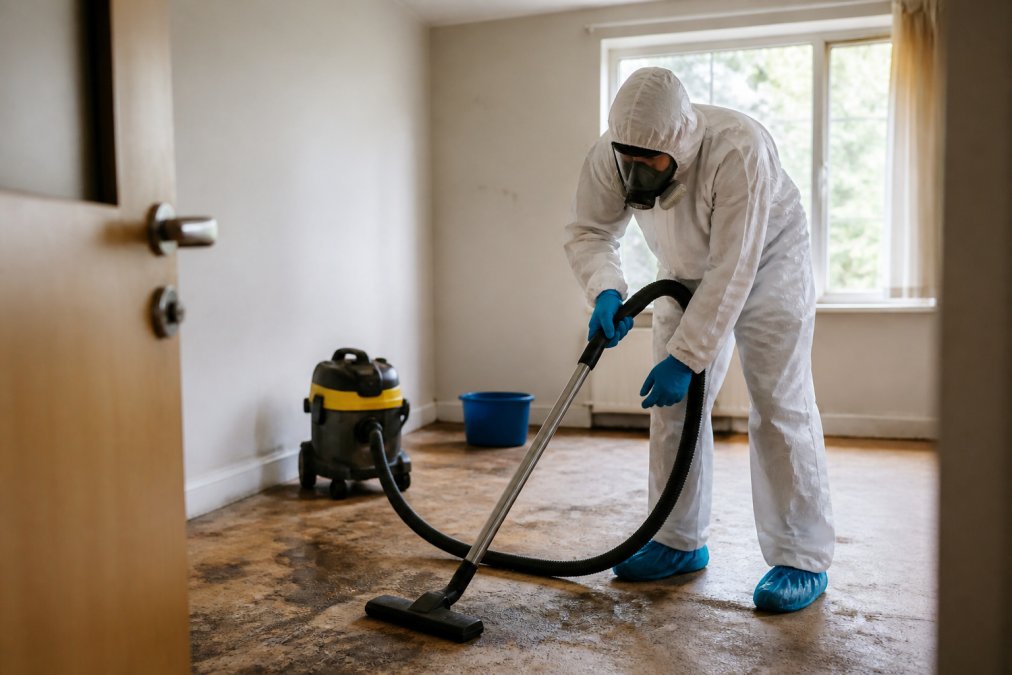
The correct scope is set by the contamination pathway and affected materials, not by appearance or odour alone.
What should a landlord do first?
- Protect people. Keep tenants, staff, neighbours and contractors away from the affected area. Do not ask an untrained person to handle sharps, bodily fluids or decomposed material.
- Deal with emergencies. Call the emergency services where there is an immediate threat to life, active violence, fire, a suspected crime or a dangerous structural or electrical condition.
- Confirm scene release and lawful access. After a death or suspected crime, do not disturb the area until the relevant authority has released it. Confirm who can authorise entry and work.
- Stop the source where safe. Arrange plumbing, drainage or building repairs where these can be completed without entering a contaminated zone.
- Record facts without unnecessary exposure. Note dates, reports, affected rooms and decisions. Avoid close-up photography if it requires entering an unsafe area, and protect sensitive personal information.
- Notify the right parties. This may include the tenant, next of kin or estate representative, managing agent, freeholder, insurer and local authority.
- Obtain a specialist scope. Ask for a written description of containment, cleaning, disinfection, removal, waste handling, drying and any follow-on building work.
Common incidents and the decisions they create
Unattended death
The police, coroner or procurator fiscal process must take priority. Once the scene is released, the landlord should establish who has legal authority to permit access and deal with belongings. The estate or an insurer may be involved, but urgent work may still be necessary to control contamination and prevent further damage.
Cleaning what is visible may be insufficient. Fluids can travel through carpet, underlay, floorboards and voids. Odour treatment without removing the source can mask a problem rather than resolve it. See who is responsible for after-death cleaning and our explanation of decomposition odour.
Sewage escape
Isolate the affected area and arrange the drainage or plumbing repair. A specialist scope may include extraction, removal of heavily contaminated porous items, surface cleaning, disinfection, controlled drying and moisture monitoring. Electrical risks and contamination spreading between flats should be considered early.
Flooding and water damage
First identify the source. Water from a supply pipe is different from foul sewage or external floodwater. The source, time, materials and any cross-contamination determine whether specialist decontamination is needed. Drying is a measured process; a room looking dry is not proof that the structure has reached an acceptable moisture condition. Our guide explains when to call professional cleaners after a flood.
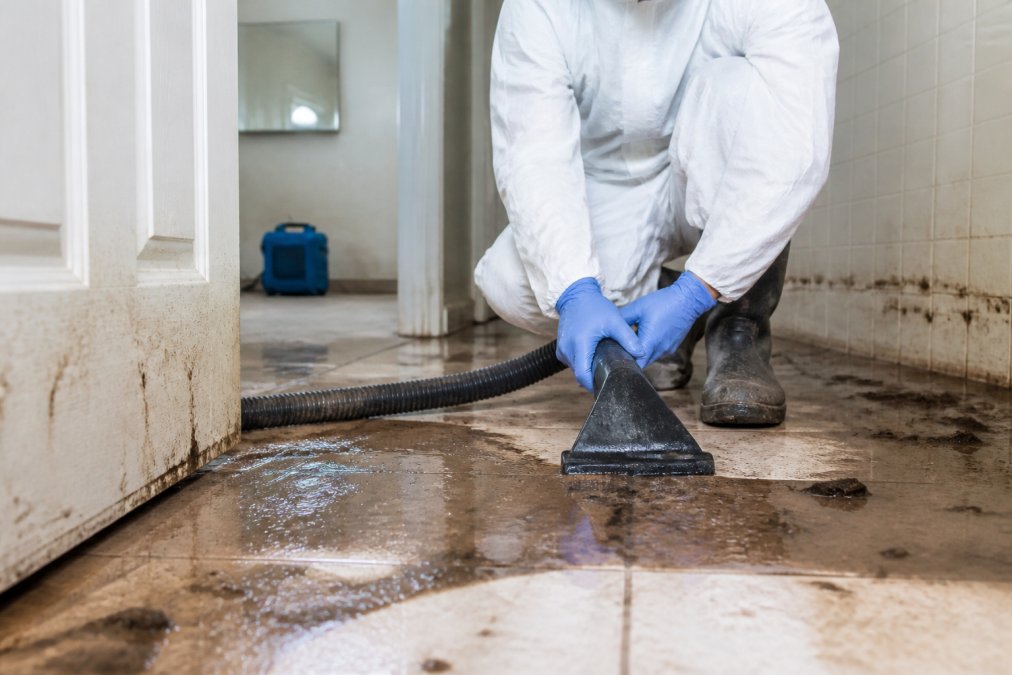
Containment helps reduce the chance of contaminants being tracked into unaffected rooms and shared areas.
Waste, paperwork and proof of work
Not every item removed from a contaminated property is automatically hazardous waste. Waste must be classified correctly, kept secure, transferred only to an authorised person and described accurately on the appropriate paperwork. Carrier registration and documentation requirements differ across the UK, so ask the contractor what applies at the property location.
| Record | What it should help establish | Important limitation |
|---|---|---|
| Assessment and scope | What was affected and what work was proposed | It should be specific to the incident, not a generic checklist |
| Photographs and moisture readings | Condition before, during and after work | Handle sensitive images securely and lawfully |
| Waste records | Description, quantity, carrier and destination | The correct note depends on classification and jurisdiction |
| Completion report | What was removed, cleaned, treated and left for follow-on work | No single “certificate” guarantees that every possible risk is absent |
| Invoices and communications | Costs, instructions, access and decisions | They do not by themselves decide legal liability |
Keep the repair report separate from the cleaning report where possible. Reoccupation may depend on several things: the contaminant source being resolved, cleaning and removal being complete, the structure being dry, utilities being safe and any reinstatement finished.
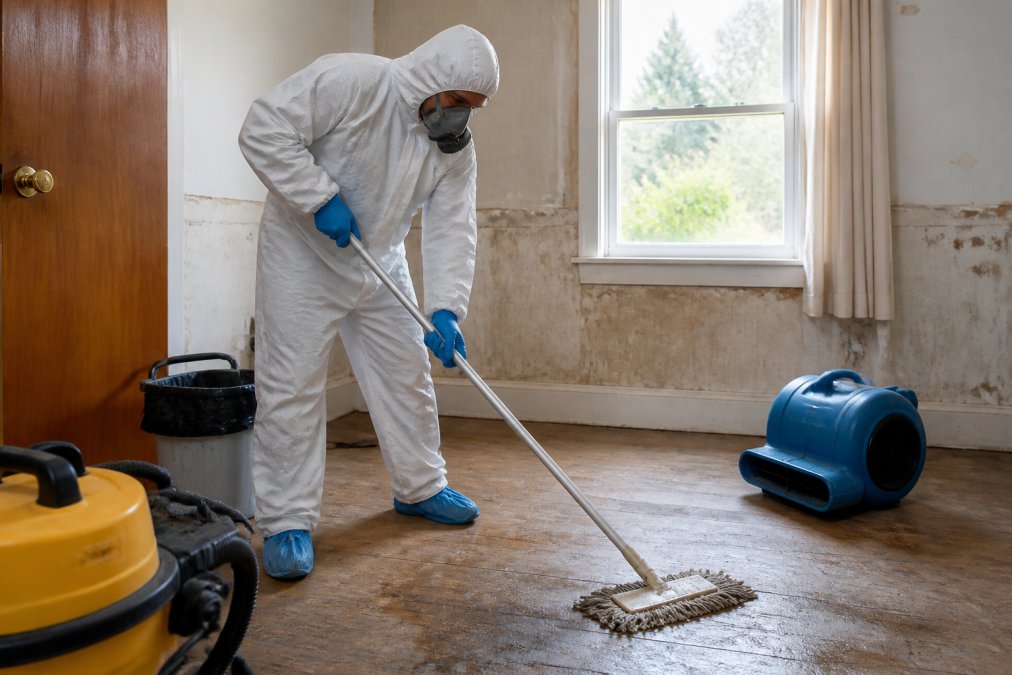
A clear written scope and completion record help landlords, tenants and insurers understand what was done.
Insurance, tenants and reoccupation
Notify the insurer as early as practical and follow any reasonable reporting conditions. Ask whether the policy covers trace and access, decontamination, damaged contents, alternative accommodation, loss of rent, drying and reinstatement. Coverage varies, exclusions may apply and authorisation should be confirmed rather than assumed. Read more about insurance for biohazard cleaning.
Communicate with tenants in plain language. Explain which areas are restricted, what immediate arrangements are being made and when the next update will be provided. Avoid disclosing unnecessary medical, death or personal information to neighbours or other occupants.
Do not set an arbitrary reoccupation date. The decision should reflect the completed scope, remaining building work, moisture condition and any relevant advice from the insurer, environmental health team or other competent professional.
How to choose a specialist cleaning contractor
Ask questions that test the proposed method, not just the company’s list of logos or certificates. Training, insurance and professional memberships can support competence, but they do not replace an incident-specific risk assessment or a clear scope.
- What experience does the team have with this type of incident and property?
- How will the work area be controlled and unaffected areas protected?
- Which materials may need removal, and who approves that removal?
- How will waste be classified, transported and documented?
- What cleaning or disinfection method is proposed, and why is it suitable?
- What does the quote exclude, such as repairs, flooring, decoration or contents storage?
- What evidence and completion report will be supplied?
- Does the contractor hold suitable public and employers’ liability insurance?
Use our separate checklist on how to vet a specialist cleaning company before appointing a provider.
Frequently asked questions
Does the landlord always have to pay for biohazard cleanup?
No. A landlord may need to organise urgent action to protect health or the building, but the final cost can depend on the cause, tenancy agreement, evidence, insurance and applicable law. Take advice before making deductions or pursuing recovery.
Can a landlord enter immediately after a death?
Not automatically. The authorities may control the scene, and tenancy, estate and access rights still matter. Confirm that the scene has been released and that entry and work are lawfully authorised.
Can an ordinary cleaner deal with blood or sewage?
Minor domestic cleaning and a significant contamination incident are not the same. Where there are sharps, extensive bodily fluids, sewage, decomposition, porous-material contamination or uncertain exposure risks, use a contractor with suitable training, controls and waste arrangements.
Is all floodwater a biohazard?
No. The source and route matter. Clean supply water is different from sewage or external floodwater, although any prolonged water damage can create additional microbial and building risks.
Does a cleaning certificate prove the property is safe?
No single certificate proves that every risk is absent. A useful completion pack explains the original scope, work performed, materials removed, waste route, limitations and any repairs or checks still required.
How quickly can tenants return?
There is no universal timeframe. Return should wait until the source is resolved, required cleaning and removal are complete, the property is suitably dry and safe, and necessary repairs or utility checks have been completed.
Get help with a rental-property biohazard
For practical advice or a specialist cleaning quote, tell TrustedCare what happened, which areas are affected and who can authorise access.
For emergencies or an active crime scene, contact the emergency services first.
