Independent UK Sharps-Safety Guide
Professional Needle Removal: Steps and Safety Guide
What to do when a discarded needle or syringe is found, how trained teams manage sharps safely, where to report public finds and the urgent steps to take after a needlestick injury.
For direct service enquiries across England, Scotland and Wales. Attendance depends on location, site conditions and current availability.
Quick answer: if you find a discarded needle in a public or shared area, do not touch it. Keep children, pets and other people away, note the exact location and report it to the local authority or landowner. Professional removal is appropriate when sharps are hidden, numerous, repeatedly found or mixed with blood, waste or drug paraphernalia.
A discarded needle can cause a puncture injury and possible exposure to blood-borne viruses. The presence of a needle does not mean infection will occur, but direct handling creates an avoidable risk. Gloves do not make it safe to pick up a needle by hand.
Gently encourage the wound to bleed under running water, wash it with soap and water, do not scrub or suck it, cover it with a waterproof dressing and seek urgent medical advice. Workers should also report the incident to their employer.
What Should You Do if You Find a Discarded Needle?
Do not pick it up, recap it, bend it, snap it or place it in a household bin. Keep others away without standing close to the sharp. If it is safe to do so, record the precise location and a nearby landmark so the collection team can find it.
Public land
Report the item to the local council or the authority responsible for the land. Collection services and response times vary by area.
Private property
Notify the owner, landlord, managing agent or site manager. They can arrange trained staff or a specialist contractor.
Immediate danger
Keep people back and explain why the location is urgent when reporting it. Do not create another risk by guarding it from close range.
GOV.UK provides a postcode service for clinical-waste collections in England and Wales. Discarded street needles may use a different local reporting route, so check the council website for the location concerned.
What Professional Needle Removal Involves
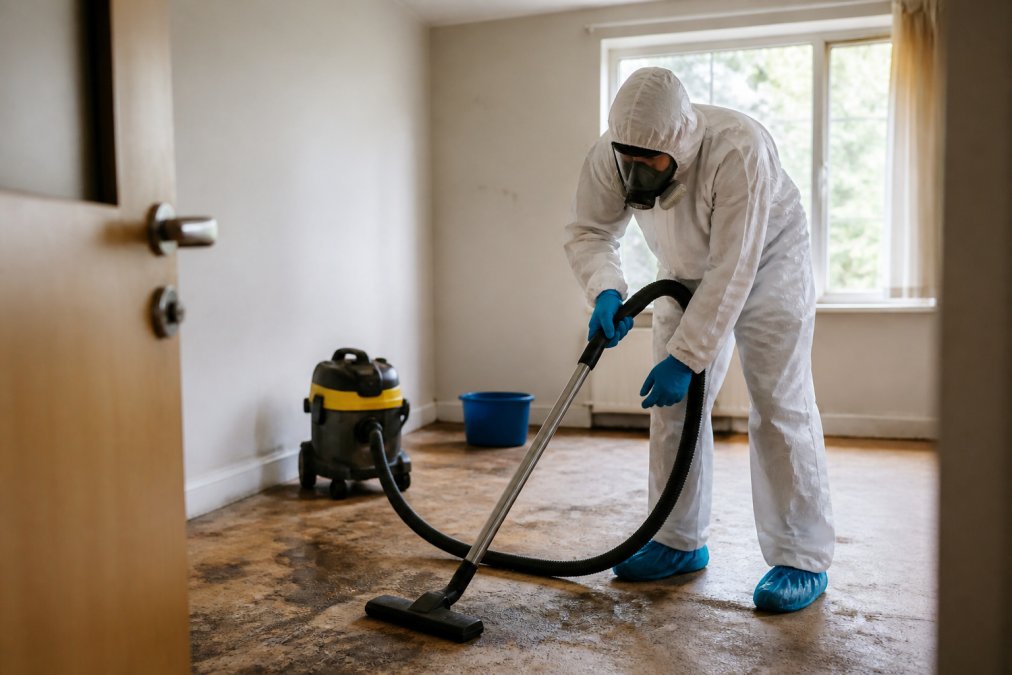
Professional needle removal is a controlled service for locating, retrieving, containing and arranging disposal of discarded sharps. It may cover a single visible syringe or a systematic sweep of a property, garden, bin store, communal area, void, car park edge or overgrown site.
The service should be defined in writing. “Needle removal” and “needle sweep” are not always the same: removal may address one reported item, while a sweep searches an agreed area for additional sharps.
For pricing factors, see our guide to needle-sweep costs in the UK.
Protective equipment does not remove the hazard
PPE should be selected from the site risk assessment. Depending on the work, it may include suitable gloves, protective clothing, sturdy footwear and eye protection. No glove should be treated as permission to pick up a needle by hand. The primary controls are avoiding direct contact, using suitable retrieval equipment and placing the container close to the point of collection.
A Risk-Led Needle-Removal Process
The exact method depends on the site, visibility, number of sharps and other hazards. A trained team may use the following stages:
- Confirm the area: identify the agreed search boundary, access restrictions and people who may be affected.
- Assess additional hazards: look for broken glass, unstable waste, blood, chemicals, poor lighting, traffic, aggressive behaviour, confined areas or suspected asbestos.
- Control access: prevent residents, staff or the public entering while the area is inspected.
- Prepare equipment: position a purpose-designed sharps container near the item and select suitable retrieval tools. Do not carry a loose sharp across the site.
- Retrieve without hand contact: use equipment suited to the item and location. Do not recap, bend, snap or pass a loose needle between people.
- Deposit immediately: place the item directly into the sharps container without forcing it through the opening.
- Inspect the surrounding area: check the agreed search zone methodically, including locations identified in the risk assessment.
- Manage contamination: where blood or body fluid is present, follow an appropriate cleaning and decontamination process after the sharp has been controlled.
- Record and transfer: document the area searched, items found and waste route.
A drinks bottle, bin bag or cardboard box is not a sharps container. An unsuitable container can be punctured, opened accidentally or mistaken for ordinary waste.
Need a Needle Sweep or Sharps Assessment?
TrustedCare can discuss the location, number of visible items, access and whether other contamination is present. Send the postcode and a safe-distance description of the area.
Sharps Containers and Safe Storage
A sharps container should be purpose-designed, puncture-resistant, leak-resistant where required, stable, closable and compatible with the selected waste route. HSE guidance says containers should be designed to reduce overfilling and accidental spillage, allow safe temporary and final closure, and resist puncture.
Follow the manufacturer’s marked fill line. Do not rely on a generic “three-quarters full” rule where the container gives a different limit. Never push contents down, reach into the opening or attempt to retrieve an item from inside.
| Container stage | Correct action | Avoid |
|---|---|---|
| In use | Keep upright, stable, identifiable and inaccessible to unauthorised people | Leaving the lid fully open or placing it on an unstable surface |
| At the marked fill line | Apply the final closure according to the manufacturer’s instructions | Forcing in another item or pressing contents down |
| Awaiting collection | Store securely in the designated area for the correct waste stream | Placing it in general waste, recycling or an unattended public area |
How to Report Discarded Needles
Provide enough information for the collection team to locate the item without asking you to approach it:
- the precise location, postcode and nearest landmark
- whether it is on public, private or managed land
- the approximate number of visible items
- whether the sharp is exposed, hidden, broken or mixed with other waste
- whether children, residents or the public can access the area
- any safe-distance photograph that shows the location without displaying identifiable people
Do not promise residents a standard collection time. Some councils collect discarded street needles, while others use contractors or direct reports to the landowner. Availability and response targets differ.
Sharps Waste: Classification, Transport and Disposal
It is inaccurate to say that every sharp is automatically the same type of hazardous waste. Classification depends on what the item contains, how it was used, whether contamination or medicines are present and the rules applying in the relevant UK nation.
Businesses and organisations should have the waste assessed and use the correct packaging, documentation, carrier and receiving facility. Requirements differ across England, Wales, Scotland and Northern Ireland.
- Do not place loose sharps in general waste or recycling.
- Use the container and waste stream specified for the assessed contents.
- Check the carrier’s authorisation or registration.
- Retain the transfer or consignment records required for that movement.
The HSE overview of healthcare-waste management links the safe storage, classification and transport requirements. Local household arrangements should be confirmed with the council, GP practice, pharmacy or healthcare provider as appropriate.
Risk Assessments for Needle Sweeps
A workplace risk assessment should be proportionate to the area and activity. It should identify who may be harmed, the search boundary, likely hiding places, visibility, access, lone-working concerns, public contact, additional waste and the procedure following an exposure.
Site factors that change the method
- overgrown vegetation, rubble, bags or loose waste that conceal sharps
- poor lighting, basements, voids, stairwells and confined access
- roadsides, car parks or moving vehicles
- blood, bodily fluid, chemicals or suspected drug residue
- children, vulnerable residents, customers or members of the public nearby
- evidence of repeated activity requiring scheduled inspections
A sweep can only cover the area, access and visibility agreed. Heavy vegetation, fixed structures or sealed voids may limit the inspection. The completion record should state those limitations rather than promise that no sharp exists anywhere on the site.
For wider site checks, our guide explains how to assess biohazard risk. You can also review how to vet a specialist cleaning company before accepting a quotation.
What to Do After a Needlestick Injury
A puncture from a used or discarded needle needs prompt medical advice because treatment decisions can be time-sensitive. Follow current HSE first-aid guidance:
- Encourage the wound to bleed gently, preferably under running water.
- Wash it using running water and plenty of soap.
- Do not scrub or suck the wound.
- Dry it and cover it with a waterproof dressing.
- Seek urgent medical advice, such as occupational health, NHS 111, an urgent treatment service or emergency department as locally appropriate.
- If the incident occurred at work, report it to the employer immediately.
If blood or body fluid enters the eyes or mouth, rinse the area thoroughly with water and seek urgent medical advice.
The clinician will assess the type of exposure, injury depth, any visible contamination, the known or unknown source and vaccination history. Do not make treatment decisions based only on how old or clean the needle appears.
HSE provides current guidance on needlestick and sharps injuries. Workplace reporting under RIDDOR applies only in specified circumstances; the HSE guidance should be used instead of assuming every sharps incident is automatically reportable.
When Professional Assessment May Be Needed
Specialist help is sensible when the site cannot be made safe through the organisation’s trained procedure or when the extent of the hazard is uncertain.
- several needles, syringes or blades are present
- sharps are hidden in bags, furnishings, vegetation, drains or loose waste
- the area is dark, confined, unstable or open to the public
- blood, bodily fluid or other contamination is visible
- drug paraphernalia or unknown chemicals are present
- the site requires a documented sweep before contractors, residents or staff enter
- staff do not have suitable training, equipment, containers or a disposal route
Where sharps are part of wider biological contamination, read our guide to biohazard cleaning in the UK.
Frequently Asked Questions
Should I pick up a discarded needle if I wear gloves?
No. Gloves do not make direct hand contact safe and may be punctured. Keep people away and report the item. Trained workers should use a risk-assessed method, suitable retrieval equipment and a purpose-designed sharps container.
Who removes needles found on public land?
It is commonly handled through the local council or the authority responsible for the land, but the reporting route and response time vary. Use the council website or contact environmental services. On private land, notify the owner or managing agent.
Can a used needle go in household rubbish?
No loose needle should be placed in general waste or recycling. Household medical sharps require an approved sharps container and the local collection or return route. A discarded public needle should be reported rather than taken home.
Are all discarded needles classed as hazardous waste?
Not automatically in one identical category. Classification depends on the contents, use, contamination and national waste rules. A competent waste provider should identify the correct stream, container, documentation and treatment route.
When should a sharps container be closed?
Follow the manufacturer’s marked fill line and closure instructions. Do not overfill it, push contents down or reopen a container after final closure.
What should I do immediately after a needlestick injury?
Gently encourage bleeding under running water, wash with soap and water, do not scrub or suck the wound, cover it and seek urgent medical advice. Report workplace exposures to the employer immediately.
Need Professional Sharps Removal?
For direct commercial help, contact TrustedCare with the postcode, location type, approximate search area and whether needles or other contamination are visible. Do not handle or rearrange items to take photographs.
Confidential enquiries. Coverage across England, Scotland and Wales. Current availability is confirmed when you contact TrustedCare.
