Who Is Responsible for After-Death Cleaning in the UK?
Responsibility commonly rests with the property owner, landlord, housing provider or the deceased person’s estate, depending on the ownership, tenancy and circumstances.
In the UK, responsibility for arranging after-death cleaning commonly falls to the property owner, landlord, housing provider or the person authorised to administer the deceased person’s estate.
There is no single answer that applies to every property. The correct arrangement can depend on who owns the premises, whether it was rented, the tenancy terms, who has lawful access and whether an insurer is involved.
Family members are not automatically personally responsible for every cleaning cost simply because they are the next of kin. The estate, property owner or another responsible organisation may need to arrange or fund the work.
This guide explains how responsibility is commonly approached and what families, executors, landlords and housing providers should check before authorising work.
When Is Professional After-Death Cleaning Required?
Not every death in a property requires specialist cleaning. If there is no biological contamination, normal domestic cleaning may be sufficient.
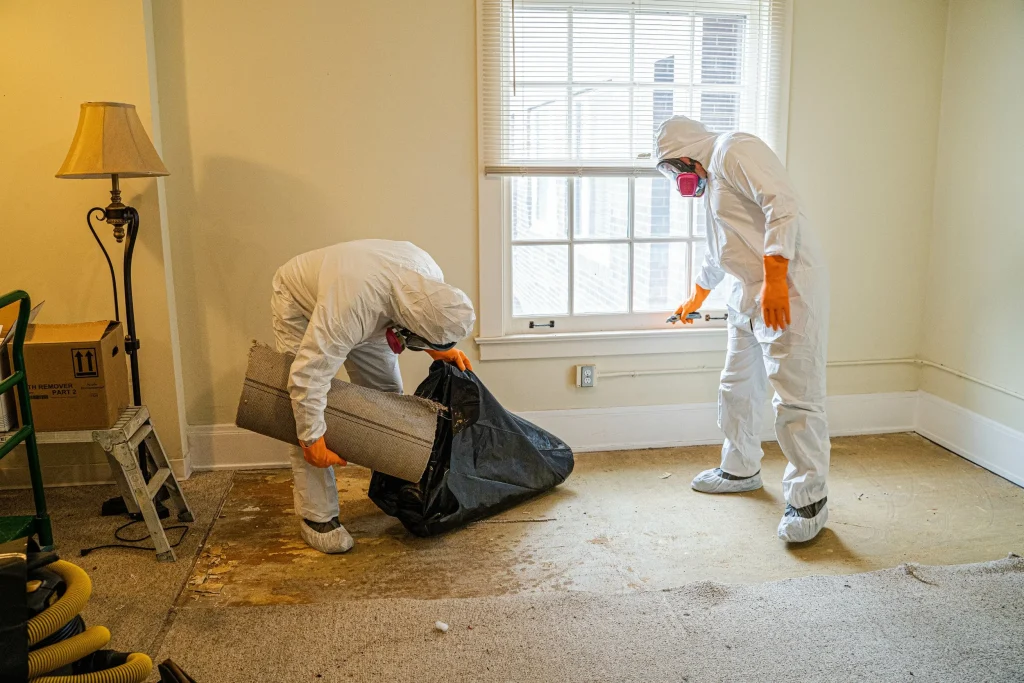
Professional cleaning may be required following an unattended death, traumatic incident or medical emergency where the property has been affected by:
- blood or bodily fluids
- decomposition contamination
- persistent decomposition odours
- affected carpets, furnishings or flooring
- insect or pest activity
- biohazardous waste
Where these hazards are present, standard domestic cleaning may not deal with contamination beneath flooring or inside porous materials.
More information is available in TrustedCare’s guide to unattended-death cleaning .
Responsibility in Owner-Occupied Properties
If the deceased person owned and lived in the property, cleaning is commonly arranged by the executor, administrator or another person authorised to deal with the estate.
The cost may be treated as an estate or property expense, depending on the circumstances and the advice received by those administering the estate.
Cleaning may be needed before the property can be:
- valued or inspected
- cleared of possessions
- placed on the market
- transferred to a beneficiary
- occupied again
Families should establish who has authority to enter the property and approve expenditure before commissioning substantial cleaning or clearance work.
Responsibility in Rented Properties
Responsibility in rented accommodation can be more complicated because ownership, the tenancy, the deceased person’s belongings and contamination to the building may involve different parties.
The Deceased Tenant’s Estate
The executor or administrator may need to deal with the tenant’s personal belongings, paperwork and estate matters. However, this does not automatically mean that family members must personally pay every property-related cost.
The Landlord or Managing Agent
A landlord or managing agent may need to arrange cleaning to protect the building, deal with structural contamination and prepare the property for future occupation.
Whether any cost can later be recovered through the estate, tenancy deposit or insurance depends on the tenancy, policy wording, evidence and individual circumstances.
The landlord should avoid assuming that the tenant’s relatives are automatically liable. The tenancy documents, insurer and authorised estate representative should be consulted.
Responsibility Still Unclear?
TrustedCare can discuss the property, the contamination involved and who is currently managing the premises. We can then explain the likely cleaning requirements and provide a clear quotation.
Housing Associations and Council Properties
In social housing, a council or housing association may arrange cleaning because it owns or manages the property. The precise procedure depends on the organisation’s policies, tenancy terms and the circumstances of the death.
A housing provider may need to:
- confirm that the property has been released
- identify who is authorised to access it
- protect and document personal possessions
- arrange specialist decontamination
- prepare the property for repair or future letting
- consider whether insurance or the estate may meet any costs
Families or representatives should contact the housing provider before arranging work independently. Different councils and housing associations may follow different procedures.
Care Homes and Supported Living
Where a death occurs in a care home, supported-living property or managed accommodation, responsibility may be divided between the care provider, property operator, housing provider and the deceased person’s estate.
The organisation responsible for the premises will normally need to manage hygiene and safety within the building. The estate representative may separately be responsible for decisions concerning personal possessions.
Contracts, occupancy agreements and organisational procedures should be reviewed before responsibility is assumed.
What Happens When Police Have Attended?
Police attendance does not normally mean that the police will arrange or pay for cleaning. Their role is to investigate the circumstances and control access while the scene is required.
Cleaning should not begin until the police, coroner or other relevant authority has formally released the property and lawful access has been confirmed.
Once released, cleaning is usually arranged by the property owner, landlord, housing provider or person administering the estate.
Who Pays for After-Death Cleaning?
The person who arranges the work is not necessarily the party that ultimately bears the cost. Payment may potentially come from:
- the deceased person’s estate
- the property owner or landlord
- a council or housing association
- buildings, contents or landlord insurance
- another organisation responsible for the premises
Insurance should not be assumed. Cover depends on the policy wording, exclusions, excess and circumstances. Where a claim may be possible, the insurer should be contacted before major removal or strip-out work begins.
Read TrustedCare’s detailed guide explaining who may pay for after-death cleaning .
What to Do If Responsibility Is Unclear
If there is uncertainty, the following steps can help:
- confirm who owns or manages the property
- identify the executor, administrator or authorised representative
- review the tenancy or occupancy agreement
- contact the landlord, managing agent or housing provider
- notify the relevant insurer
- confirm that police or coroner involvement has ended
- obtain a written cleaning quotation
- seek legal advice where responsibility is disputed
Do not begin removing possessions or contaminated materials until lawful access and authority to proceed have been confirmed.
Need Discreet After-Death Cleaning Support?
TrustedCare assists families, executors, landlords, housing providers and property managers across England, Scotland and Wales.
View TrustedCare’s after-death cleaning service
TrustedCare Editorial Team publishes UK guidance on specialist cleaning and biohazard remediation, including after-death cleaning, flood restoration, and contamination control. Content is written for homeowners, landlords, housing providers, and facilities teams seeking clear, practical information.
Pingback: Does Insurance Cover After Death Cleaning in the UK? What You Need to Know - UK Bio Hazard Blog
Pingback: What Happens to Furniture and Belongings After a Death? A Practical UK Guide - UK Bio Hazard Blog
Pingback: After Death Cleaning in Rented Properties: Landlord vs Tenant Responsibilities - UK Bio Hazard Blog
Pingback: Average Cost of Trauma Cleanup UK: 2026 Price Guide
Pingback: Landlord Responsibilities for Biohazard Cleanup
Pingback: Professional Cleaning After an Unattended Death | UK Guide